Almost silent, the
Long boat passes by slowly,
Almost unnoticed.
It's been a long time since I wrote a real haiku.

Almost silent, the
Long boat passes by slowly,
Almost unnoticed.
It's been a long time since I wrote a real haiku.

...there’s still a good chance Maxwell will evade punishment. Epstein himself originally got what was essentially a slap on the wrist after abusing scores of girls, because he was rich and influential and the quality of a person’s defense representation depends on how much money they have. (One way to make the punishment system more egalitarian would be to ban private counsel, so that everyone had to to use the public defender’s office.)
Maxwell has already been able to evade the law for much longer than anyone with less wealth and fewer social connections. But whether she ultimately walks or not, let us be careful not to focus excessively on Maxwell’s individual pathologies. We must also understand the social and economic milieu that made her alleged actions possible.
It reminded me of the Marquis de Sade who got away with multiple rapes, abductions and pedophilia before the law caught up with him. He got away with his crimes for so long because he was an aristocrat, and most of his victims were the working class - servants and prostitutes. Of course he wasn't alone among the aristocracy in abusing the non-elites, he was just more extreme than most, probably he was a certifiable psychopath. But luckily for his historical legacy he also wrote about rape, pedophilia. etc. which made him a hero to some, especially in France.
In the 1990s, American playwright Doug Wright decided that it would be cool to portray de Sade as a hero of free speech, so he wrote QUILLS which was later made into a movie.
It would be like someone deciding, 200 years from now, to write a play portraying Jeffrey Epstein as a hero. Somebody probably will, if it turns out that Epstein has written a fictionalized version of his crimes and thus qualifying him as an above-bourgeois-morality Great Man of the Arts.


 |
| Mr. DeMille, I'm ready for my close-up |


...one afternoon, when Lennon heard a familiar voice crackling over the car radio. "F*ck a pig! It's Paul!" he exclaimed. And sure enough, it was "Coming Up," McCartney's latest single. To Lennon's ears, it was simply infectious. Indeed, while he had tended to dismiss much of Paul's recent work as empty-headed instances of bubblegum pop, this new tune had truly caught his imagination.
For Lennon, hearing "Coming Up" that afternoon in the station wagon had a revelatory effect on him. "I thought that 'Coming Up' was great," he remarked later that year. "And I like the freak version that he made in his barn better than that live Glasgow one," adding that "if I'd have been with him, I'd have said, 'That's the one to do.'"
 |
| They asked George to join because he knew the most chords. |
"wow, this is an interesting-looking guy"
I admit I avoided listening to this interview of Paul McCartney by Sean Ono Lennon that I saw floating around YouTube land because I've been extremely disappointed by Ono Lennon's ongoing support for the race-baiting creeps of the Intellectual Dark Web.
This is a truncated version below. The full version is available at the BBC.
But I finally couldn't resist. I have written about McCartney's unusually considerate behavior for a 1960s rock and roll star - which is most noticeable in his kindness to children and especially his relationship with Julian Lennon. How weird to be Julian Lennon, knowing that two of the greatest Beatles songs of all time - Lennon's Lucy in the Sky with Diamonds and McCartney's Hey Jude were inspired by him.
So I was too curious about McCartney's relationship with Lennon's other son to resist listening to this interview for long.
And it is utterly charming. The interview kicks off with a new piece of info about the Lennon/McCartney partnership - McCartney mentions that he saw Lennon around the neighborhood a couple of times prior to meeting him at the Woolton Fete and said to himself: "wow, this is an interesting-looking guy"
And if that isn't enough, towards the end McCartney sings and plays guitar to demonstrate for Sean one of his early bad songs "Just Fun" and I imagine that's a world premier.
It's utterly charming.
 I've worked with several people who live to sabotage their coworkers, over the course of my career, but in the past year I've worked with a woman who was the worst of all and on top of that she was the living embodiment of the Karen meme.
 And on top of everything else she was the most narcissistic person I have ever met. She touted herself as a model and used to give the rest of us regular reports on her latest outfit for her latest photoshoot, which nobody wanted to see. Her personal web site is full of images of herself.
 |
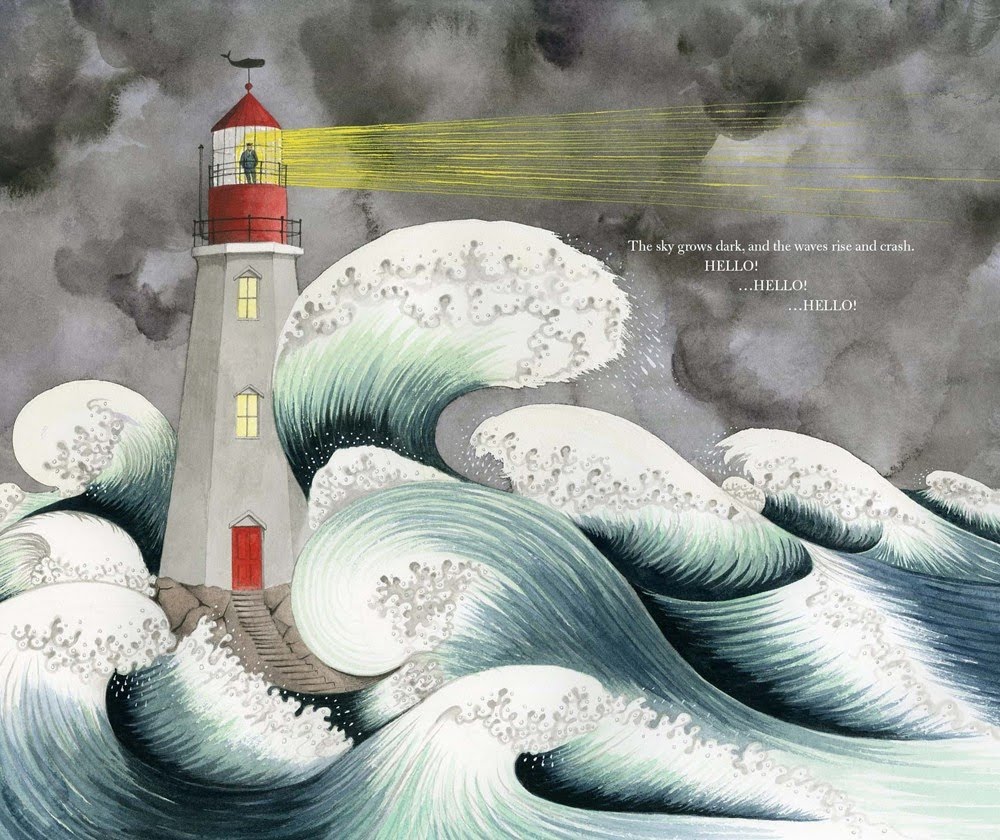
| Sophie Blackall, pioneering the use of conjoined twins in children's book illustrations |
From seven thousand miles away I heard the crackling committee and the word medal, and the first thing out of my mouth was…
Oh no. No. No.
Followed by, Are you sure about this?
I hate to tell you, but I tried to give the thing back.
As the news of this second Caldecott sank in, I kept thinking, No one deserves this much good fortune. And then I remembered how I felt when my second child, Eggy, was born. I didn’t, for a minute, offer to give my son back. His arrival was every bit as miraculous and joyful and distinct as it had been with my first child, Olive.
In 2000, Blackall was inveigled by New York. She convinced her husband, and two small children (who couldn’t talk and had no say in the matter), to pack suitcases and sense of adventure and join the diaspora. After two months of pounding the streets, portfolio in hand, and despite the tireless efforts of her agent, the return plane ticket was cashed in to pay the rent. Just when the highlight in the day had become half a can of Budweiser at six o’clock, the fax machine coughed and spluttered and delivered a commission of nine illustrations for The New York Times.But at least someone else has noticed how awful Blackall is at perspective.
Sophie Blackall grew up in Australia where she learned to draw on the beach with sticks, which has not altogether helped her sense of perspective. She completed a Bachelor of Design in Sydney, which furnished her with useful Letraset, bromide and enlarger machine skills. The following few years were spent painting robotic characters for theme parks, providing the hands for a DIY television show, and writing a household hints column.
She's also bad at composition and anatomy.



 |
| January 1995 |
I am skeptical of claims of the supernatural, so there must be a rational explanation for the sound outside my window, someone calling my name and saying "good-bye," on the morning Earl Rich died.
I've often wondered what the rational explanation could be. In the novel by Kurt Vonnegut, "Breakfast of Champions" one of his characters died this way: "Like all Earthlings at the point of death, Mary Young sent faint reminders of herself to those who had known her. She released a small cloud of telepathic butterflies..."
I thought of that Vonnegut passage just after I looked out my window to see who was calling. Nobody was there. In his book "The Demon Haunted World" astronomer Carl Sagan said that one claim of extra-sensory perception that deserved serious study was this: 'people under mild sensory deprivation can receive thoughts or images "projected" at them.'
Sagan doesn't speculate on how thoughts or images might be projected. One of my theories is that maybe neurons in the brain, which send and receive electrical signals, at a moment of extreme stress, could transmit electrical pulses at a wide distance. Another theory I have was inspired by reading about quantum mechanics. There is a phenomenon called "entanglement" where two particles become "entangled" and then the state of one particle is always matched by the state of the other particle, even when very far away from each other. It's so strange and counter-intuitive it freaked Albert Einstein right out. He called it "spooky action at a distance." That sounds about right to me: spooky action at a distance.
 nt faint
  |
| SAVE ME BJ |
 |
| And he was one of the most beautiful men of all time |
When Beatles drummer Ringo Starr briefly quit the band during the recording sessions for “The White Album,” McCartney supplemented his bass and vocals duties by filling in on a number of standout tracks (including “Back In The U.S.S.R.” and “Dear Prudence”) with stellar performances on drums. And as soon as The Beatles broke up and Starr was no longer around, McCartney played every single drum track on his first solo album, then on a number of Wings albums and other solo albums thereafter.
But just five days after Epstein’s death, McCartney took the reins and pushed his bandmates to move forward with the new Magical Mystery Tour project he’d devised. But Lennon was still on his way out: The following year, Lennon began making music outside The Beatles (with Yoko Ono) and even stormed out of sessions for “The White Album.”
That dynamic — Lennon one foot out the door, McCartney keeping everyone together — held steady for the next two years. Even when The Beatles actually did come together for an enormous success like “Hey Jude,” Lennon saw little but the group’s end. Lennon later said of that song’s lyrics, “The words ‘go out and get her’ – subconsciously – [Paul] was saying, ‘Go ahead, leave me.'”


The film creates a cheerful counter-narrative to the Beatles’ 1970 swan song “Let It Be” film, which essentially documented the group’s breakup and is a rather downbeat experience. The new film, segments of which Variety viewed earlier this year, feels completely different, with the four members laughing and clowning around in classic moptop fashion. Unlike virtually every other item in the group’s oeuvre, has been out of circulation for many years — as if the surviving bandmembers didn’t want to deal with it — although the group has promised a restored version will be released sometime in the future.


 |
| Astrid and Stu Sutcliff. He died at age 21. She outlived him by 60 years. |
Ms. Kirchherr discovered the Beatles through her boyfriend at the time, Klaus Voormann, a fellow art student. After a quarrel, Mr. Voormann left her house; walking past the Kaiserkeller, he was drawn to the Beatles’ high-energy sound.Voorman, as any true Beatles fan knows, was responsible for creating the cover of the Beatles album Revolver, one of the greatest album covers of all time.


Collecting the musicians and their instruments in her Volkswagen, Ms. Kirchherr brought them to a fairground, where she shot both individual and group portraits in stark black and white...
...“It was early in the morning, because I only used daylight,” Ms. Kirchherr told The Age, a newspaper in Melbourne, Australia, in 2005. “So the poor guys had to get up very early. They only stopped playing at four o’clock in the morning, and we met about nine or 10.”
In 1988, she and Ulf Krüger, a German musician, started K & K, a Hamburg shop that sold vintage photography and books.I couldn't believe how reasonable the prints were back then... around $200 each. Now they've gone up in price to about $1000 each. Not very much for 16 years.


