Tuesday, January 24, 2012

more thoughts on Mac Wellman

Someone commented on my recent post "poor Mac Wellman" asking "who are you, again?"

I suspect it's Wellman himself. After I wrote the post, someone doing a search for "Mac Wellman" visited my web site several times. And nine times out of ten the person Googling a name is the person themselves.

But no worries - as the commenter, with the use of "again", is pointedly saying, I am nobody. My opinions are not a threat to the hermetically sealed perfection that is the career of Mac Wellman. For unlike other playwrights, like say, Tennessee Williams, William Shakespeare, Arthur Miller, Wellman does not get bad reviews. I am not kidding. Here is an interview with Wellman from  BOMB magazine from 1995:
LY You always get good reviews.

MW I know.

LY Always.

MW I know. At least, most of the time.

LY Your plays make up-to-the-moment points that you don’t get from a newspaper. Why isn’t there a Mac Wellman play going on in every neighborhood every night?

MW That’s pretty much what I’ve been doing—two, three plays a year for the past five, six years. I’m worn out.

LY I don’t know how you can turn it out like that.

MW I don’t either. I am slowing down, I know that.
It doesn't strike the interviewer or Wellman as odd that he always gets good reviews. Rather they find it inexplicable that those good reviews don't translate into vast public acclaim.

Just who do these nobodies in these neighborhoods think they are, anyway? How could they not be begging him to give them more of this?
The overall thrust of the piece seems to be about the impossibility of meaningful communication among people. Assuming that’s the case, the play totally makes its point.
And that was written by one of his admirers.

Almost all his reviews mention the communication issue, mainly the impossibility of meaningful communication. If there is any drearier topic for a theatre production, I can't think of it.

Lately Wellman has been working on  an  idea to fund CUNY MFA students.  The concern over the cost of education and the crushing debt that entails is an important issue and by no means one just for students in arts programs. It would be nice if we could just give all American students a bunch of money to continue their educations, even into post-graduate studies. And so...
...Wellman and his colleagues on the CUNY Affiliation Committee have a plan. They’ve recently launched a campaign entitled “CUNY Creative Writing MFA: The New Bohemia” that would fund a full tuition abatement for all creative-writing MFAs. If it succeeds, this initiative will render tuition entirely free for the programs at Brooklyn, City, Hunter, and Queens colleges.
But how important is it, really for a playwright to have an MFA? Instead of money to complete an MFA, why not give them money to do productions - or offer to produce their work?

That wouldn't do Wellman much good though - other playwrights receiving productions would be competition for Wellman, but more importantly, without MFA students, Wellman, the Program Coordinator of the Brooklyn College English Department Master of Fine Arts Program, Playwriting would be out of a job. So for Wellman to come up with a plan to raise five million dollars to fund this program, with the Newspeak-inspired subtitle of "New Bohemia", is a smart career move. Wellman has no trouble whatsoever with meaningful communication when it counts, whatever his plays might say about the impossibility.

Of all the reviews of Wellman's work, I think this is the most clarifying. It's a rare, bad review. However, the reviewer is certain of Wellman's titanic genius:
Wellman is a playwright of considerable merit, an icon of American experimental theater, if not its guru. He has written more than 40 plays; has received three OBIE awards (including a lifetime-achievement nod); and is, by all accounts, a brilliant, thoughtful, amazingly talented writer. But you wouldn't know from this miserably failed piece of experimental theater.
But based on the ensuing description of the work, it sounds exactly like every other play Wellman has written:
A press release... quotes Wellman as saying Hyacinth Macaw is one of "four plays that . . . taken together, [tell] a story about a young woman adrift and alienated in a world essentially gone mad. . . . Populated by corporate thieves and religious maniacs and desperate losers of all kinds." He goes on to disclose that he doesn't "write psychological plays. . . . I'm interested more in plays about the 'big picture' rather than little intimate studies of a presumably sacrosanct inner life."
That sounds reasonable and important and compelling; unfortunately, it doesn't manifest in Hyacinth Macaw. It's as if the play were afflicted with Tourette's syndrome, continually convulsing in a stream of gibberish.
The basic storyline: a mysterious stranger shows up in a family's back yard. He calls the teenage daughter an orphan and tells the mother he has a letter for her husband. She gives the letter to her husband, Ray. It informs him he is a fake and the mysterious stranger is a duplicate of him. Dad has to leave his family forever. No one really seems to mind, least of all Dad. In Act 2, the mysterious stranger gives Dad a snake because that's apparently a gift where he comes from. Dad leaves, as the other characters sing the chorus of the "Battle Hymn of the Republic." The stranger is now the new dad; he says the contract calls for him to stay 99 years. The daughter feeds him bugs. Mom runs off with Mad Wu, a vagabond from China. The daughter goes with dad to bury the moon; she caw-caws like a macaw. New dad says we are all orphans. Play over.
The critics all agree, Wellman is a genius. But how, I wonder, do they distinguish a "good" Wellman play from a "bad" Wellman play? I think this paragraph in the same review gives the game away:
To not "get" a play like this opens one up to feeling as if one's a Philistine, someone who lacks the intellect to wrestle with highly stylized "art." But it's also possible there really is nothing to get in Wellman's play. And that's fine. Plays that stubbornly refuse to give answers and are instead devoted to making the audience ask questions are absolutely worthwhile.
That's what Wellman's perfect career is all about. The worry of theatre reviewers and academics that to dislike the work of Wellman is to risk being thought a stupid Philistine. And so they err on the side of caution, and heap on the praise for yet another inscrutable piece of anti-emotional, anti-narrative incoherence.

Postmodernism was a disaster for anthropology, for example. Marvin Harris discusses the postmodern hostility towards science in his last book "Theories of Culture in Postmodern Times":
...postmodernists associate science and reason with the domination and oppression of totalitarian regimes. Since science searches for a "best answer" it it precludes diversity and leads to intolerance. In postmodern eyes "reasonable" ways are always brutally unfair to somebody... Pauline Rosenau explains that abandoning reason "means for post-modernists, liberation from modernity's preoccupation with authority, efficiency, hierarchy, power, technology, commerce (the business ethic), administration, social engineering... It means release from modern science's concern for order, consistency, predictability."
Mac Wellman, in this interview from BOMB Magazine reveals himself to be a complete postmodernist when it comes to theatre:
The failure of a lot of theater is that it’s Aristotelian, it has a beginning, a middle, and an end: Now we’re in the conflict part, now you know the conflict is going to be resolved, and then we can all get together and celebrate some perfectly obvious and banal emotional or theatrical truism in some meaningless way. I’m not saying that’s wrong, but that’s not the only kind of work. I think of theater not just as propositions but propositions put in a specific context. Take Bad Penny — that was the best thing I ever did. You couldn’t tell where it started or stopped, and it picked up its special lunacy from the setting. I’m interested in the whole problem of text against context and the interplay between them. That’s what makes something theatrical or dramatic—a complex relationship between the dialogue and the setting. Basically, I’m trying to argue for a theater that’s a little more interested in ideas and texture.
Mind you, he's not saying celebrating some perfectly obvious and banal emotional or theatrical truism in some meaningless way is wrong. Like all postmodernists, Wellman will let you draw your own conclusions.

Now postmodernism isn't quite as pernicious in the arts as it is in anthropology or other scientific endeavors - amusing the upper-classes with cachet-ridden nonsense is pretty harmless, and diverts them from insider trading or any of the many other ways they maintain their economic dominance. But still, what this passage indicates is that Wellman actually hates theatre. He doesn't say that though. Instead he posits that there are two different kinds of theatre: the old-tyme, Aristotelian kind, with a beginning, middle and end and conflicts to be resolved; and his kind, where you can't tell where it stopped or started and the interplay is between text against context. 

In actuality Mac Wellman's theatre is anti-theatre. Because theatre is about human emotion and Wellman and his fans are much too intelligent for human emotion. And really, where is the glory in representing emotional content on stage that just anybody can understand? We can establish a hierarchy based on intelligence - some people are smarter than others. And there is the economic hierarchy - people low on that hierarchy can't really afford to see experimental "theatre" can they?

But what kind of hierarchy can you establish based on emotions? Both dull people and smart people, both those who can afford the time and money to attend experimental theatre and those who can't feel love, sadness, fear, joy. And they've been feeling these things since the beginning of time. What's the point of doing theatre if you can't innovate it far beyond human identification and commonality,  beyond those "banal" done-to-death emotion-laden conflicts-to-be-resolved scenarios, into the heroic realm of word salad?

In 1996, Alan Sokal demonstrated the absurdity of postmodernism by submitting nonsense to Social Text, a journal of post-modern studies. After it was accepted, Sokal revealed in Lingua Franca that the article was a hoax, identifying it as
a pastiche of Left-wing cant, fawning references, grandiose quotations, and outright nonsense . . . structured around the silliest quotations [by postmodernist academics] he could find about mathematics and physics
The opening of Wellman's "Speculations" demonstrates how it's done:
The STRUCTURE of a play ought not be viewed as a fixed thing, but as a mutable one.

I mean, the structure of a play conceived of as a moving point:
ππππππππ . ππππππ

passing over– or through– time, from inception to end point; so that what it is relation    of    part    to    who(o)le    [Oh Mereology!]    changes    continuously    and continually;

changes because space is filled with invisible lines– as theatron. (Da Vinci) This is why vertical narrative is possible.

This is why monologue is inherently demonic.

This is why only the wicked walk in circles. (Augustine)

~
Drama takes place in phase space. The continuum of phase-space is to time as time is to space.

Theatricality    takes    place,    as    it    were, perpendicular to time, along the phase-space continuum. We do not know what we are doing.

Thus neither theatricality nor drama takes place in time, although of course they do.

Time (clock time, I mean) is of the essence only in appearance, not in APPARENCE. Time is only apparently an expression of space; the reverse is also true. (Einstein)
Real thinking as well, lies outside time, occupies an    outside-time,    “that    eternal    moment    that medieval philosophy approached in the nunc stans of the mystic”. (Arendt)
Since postmodernism does not recognize traditional values like structure and coherence, the editors at Social Text had nothing against which to evaluate Sokal's submission, except on the basis of impressive turns of phrase. This is the very essence of the "theatre" of Mac Wellman.

I'm not saying that's wrong.

If you find value in Speculations you will certainly find much value in this Postmodernism Generator. Enjoy.

--------

Update: once again, someone Googling "Mac Wellman" has visited this site - from the same URL as last time - and once again, they've posted a response. As you can see in the comments section they seem to be channeling an insulting Snagglepuss suffering from aphasia. If this isn't Wellman himself, it's someone doing a spot-on impression of what I think Wellman would sound like in a pissing contest. But since the commenter is too cowardly (different lion - Snagglepuss may have been an effeminate thespian but he was no coward) to sign their name, I can't say it's Wellman for certain. The commenter thinks I'm wrong, but about exactly what they don't say, so I can't address the  disagreements.

But then we all know about the impossibility of meaningful communication, don't we?

Monday, January 23, 2012

Krugman is modestly optimistic

Well you could have knocked me over with a feather when I saw that Paul Krugman expressed "modest optimism" in his Monday column. I might actually believe the economy is recovering now.

Krugman:
But there are reasons to think that we’re finally on the (slow) road to better times. And we wouldn’t be on that road if Mr. Obama had given in to Republican demands that he slash spending, or the Federal Reserve had given in to Republican demands that it tighten money. Why am I letting a bit of optimism break through the clouds? Recent economic data have been a bit better, but we’ve already had several false dawns on that front. More important, there’s evidence that the two great problems at the root of our slump — the housing bust and excessive private debt — are finally easing.
 Whoah.

More at the Times.

Sunday, January 22, 2012

Honey badger don't care!

The crazy nastyass honey badger. Why has it taken me until now to find out about this video???


Honey badger T-shirts!


Know your memes.

Friday, January 20, 2012

I know Astoria - the beer garden


Although the line that made me LOL was "Do you smell maple syrup?"

Possibly not everybody remembers the Manhattan maple syrup mystery. It was finally solved in 2009:
The city revealed on Thursday that the culprit was the seeds of fenugreek, a cloverlike plant, which are used to produce fragrances at a factory across the Hudson River in North Bergen, N.J. It turned out that the city had never given up trying to determine the aroma’s origin. It had quietly created a crack maple-syrup team that remained on the case. The North Bergen factory, owned by a company called Frutarom, used the herbal seeds to manufacture food flavors, releasing a pungent, generally pleasant smell in the process. Under the right weather conditions — high humidity, no rain — the aroma drifts across the Hudson onto the West Side of Manhattan.

Krugman: "call me peculiar"

If Mr. Romney is telling the truth about his taxes, he’s actually more or less typical of the very wealthy. Since 1992, the I.R.S. has been releasing income and tax data for the 400 highest-income filers. In 2008, the most recent year available, these filers paid only 18.1 percent of their income in federal income taxes; in 2007, they paid only 16.6 percent. When you bear in mind that the rich pay little either in payroll taxes or in state and local taxes — major burdens on middle-class families — this implies that the top 400 filers faced lower taxes than many ordinary workers.

More Krugmany goodness.

Thursday, January 19, 2012

poor Mac Wellman

That's what Akiva Fox, writing in an academic organ The Thread calls him. "Poor Mac Wellman."

It seems to me that Mac Wellman is doing pretty damn well for himself. Not alot of people get paid to masturbate.

You think that's harsh? Check this out and try to tell me that isn't the most egregious example of wankerage you've ever read.

Wellman doesn't just get paid to wank it, he gets awards, he gets accolades for it, as his web site bio will tell you. So why does Akiva Fox feel bad for Mac Wellman? Apparently because he isn't as well-loved as Shakespeare. Here's the context:
Shakespeare... like every great writer, a person who used language in unexpected ways to show other human beings themselves in all their inexplicable fullness. He was not a god; he was not perfect; he was not a genre; he was a writer who strung words together around the time Modern English was coalescing. He was in the right place at the right time. Had he been born in our time, like poor Mac Wellman, he might have fallen on deaf ears. Shakespeare was lucky and good, which is what all geniuses seem to be. The danger of undue reverence is that it leads to vagueness, generality, and every other fatal enemy of art. We tend to think it’s enough to say the words in the right order. Any other playwright, directed and acted the way we approach Shakespeare’s work, would have his work savaged by every critic within scribbling distance.
Apparently only reverence of Shakespeare is dangerous. Reverence for Mac Wellman seems to be an acceptable risk.

The fact that both Akiva Fox's essay and the essay he is responding to, Adam Sobsey's Shakespeare Problem both look to Mac Wellman for some kind of guidance on the subject of Shakespeare is bizarre in the extreme.  I can't think of a playwright further from William Shakespeare, in approach, in affect, in audience-orientation, than Mac Wellman.  But I'll let Wikipedia tell it:
Wellman is best known for his experimental work in the theater which rebels against theatrical conventions, often abandoning such traditional elements as plot and character altogether.
While Shakespeare's language was often innovative (and also, often long-winded and tiresome) he certainly didn't abandon plot and character. He was enough of a traditionalist that plot and character were critical - in fact one of the reasons for his standing as a genius is the way he improved on the character and plotting of his original source material.

I took a workshop at the Flea Theatre with Mac Wellman over ten years ago. It was a two-part workshop and he gave us homework in the week between part one and part two, and I thought the homework was so ridiculous, so far from the nuts and bolts of crafting a play, that I just dropped the hell out. I don't remember now what the homework entailed -  I just remember being filled with the pointless futility of it all.

It wasn't a good portent during part one when Wellman explained that while he was interested in the pagan philosopher/mathematician Hypatia of Alexandria, it wasn't because she was an atheist heroine martyred by a Christian mob. He wasn't interested in the dramatic aspects of her life and achievements, the fact that she was a sort of atheist Joan of Arc. In other words, he wasn't interested in the bits that Shakespeare would have been interested in.

I haven't seen Wellman's play, HYPATIA, but I strongly suspect that the NYTimes review is honest and accurate, and it does not surprise me a bit:
Hypatia, played by Sophia Fox-Long with the self-involvement of someone hearing inner voices, is mostly at center stage, engaging with various folks as she passes ethereally through the ages. Meanwhile a variety of narrators, who are never identified but whose costuming and locutions place them anachronistically outside the basic time frame, are spotlighted and blacked out as they take turns speaking.

One has the manner and dress of a television newswoman, another a businessman speaking in Brooklynese, a third a nightclub torch singer. A fourth emanates from an electronic device. Their echolalic repetitions as they puzzle over the legend of the main character are perhaps a suggestion that the mysteries that so appealed to Hypatia -- the nature of zero, for instance -- have remained symbolically in force through the ages. But perhaps not.
Why have an atheist Joan of Arc when you can have Hypatia the flower child in lah-lah land?

No, the plays of Mac Wellman are pretty much the opposite of the plays of William Shakespeare, and I don't think Wellman has any insights into Shakepeare's works that are at all useful. The poor man will just have to get by with getting paid to wank-off for his usual audience of academics. I'm sure the people working at Foxconn pity the hell out of him.

Fortunately someone was interested in telling Hypatia's real story:

Wednesday, January 18, 2012

Happy birthday Schroeder

Like many American children, I'll wager, the first classical composer I was aware of was Beethoven, and thanks entirely to Schroeder, the musical prodigy character in Charles M. Schulz's Peanuts ensemble. I don't think I knew who Mozart was until a teenager, at least. Thanks to Schroeder I had heard the name Beethoven by the time I was in first grade. And according to Wiki it could have been Brahms:
Schulz once revealed that he had originally planned to depict Johannes Brahms as Schroeder's idol, but decided that Beethoven simply sounded "funnier."
And today, January 18, also according to Wiki, is Schroeder's birthday. I learned this quite by accident. Yesterday I was listening to classical music during work and noticed I really liked the music and then discovered it was Beethoven's seventh symphony and it occurred to me that I didn't own all of Beethoven's symphonies and immediately bought an album on iTunes containing all of them - it was a bargain at $6. More about Beethoven's symphonies in a future post.

Anyway, Beethoven made me think of Schroeder and I became curious if he had a last name, which apparently he does not. Although Schroeder is a distinctive enough first name that he doesn't really need a last name. Apparently Schroeder made an appearance on South Park and one on The Simpsons.

Schroeder first appeared in the Peanuts strip in 1951, as a baby. Presumably that would mean he was born January 18, 1950 which would make him 62 years old today. And he still has all his hair.


PLEASE NOTE: the Wikipedia links will not work on January 18, 2012 because Wiki is conducting an anti-SOPA blackout.

Tuesday, January 17, 2012

New Yorker Parity Report - January 23, 2012

Exact same gender parity status as last this week - or if you want to get technical, down by 1 female writer because Ariel Levy gets two separate pieces this week. I counted her once for each .


The New Yorker Parity Report

A regular report on the gender parity - or lack thereof - of the current issue of The New Yorker based on table of contents by-lines
Includes fiction, non-fiction, poems. Does not include illustrations.


A score of 50% means that half of all writers in the issue are female.
A score of greater than 50% would mean more female than male writers. This never happens.


Parity change from previous week: 0%

January 23, 2012

Total writers: 22
male: 17
female: 5
gender parity score: 22%

Last week's score
Total writers: 22
male: 17
female: 5
gender parity score: 22%


Monday, January 16, 2012

Letter from a Birmingham Jail

16 April 1963

My Dear Fellow Clergymen:

While confined here in the Birmingham city jail, I came across your recent statement calling my present activities "unwise and untimely." Seldom do I pause to answer criticism of my work and ideas. If I sought to answer all the criticisms that cross my desk, my secretaries would have little time for anything other than such correspondence in the course of the day, and I would have no time for constructive work. But since I feel that you are men of genuine good will and that your criticisms are sincerely set forth, I want to try to answer your statement in what I hope will be patient and reasonable terms.

I think I should indicate why I am here in Birmingham, since you have been influenced by the view which argues against "outsiders coming in." I have the honor of serving as president of the Southern Christian Leadership Conference, an organization operating in every southern state, with headquarters in Atlanta, Georgia. We have some eighty five affiliated organizations across the South, and one of them is the Alabama Christian Movement for Human Rights. Frequently we share staff, educational and financial resources with our affiliates. Several months ago the affiliate here in Birmingham asked us to be on call to engage in a nonviolent direct action program if such were deemed necessary. We readily consented, and when the hour came we lived up to our promise. So I, along with several members of my staff, am here because I was invited here. I am here because I have organizational ties here.
But more basically, I am in Birmingham because injustice is here. Just as the prophets of the eighth century B.C. left their villages and carried their "thus saith the Lord" far beyond the boundaries of their home towns, and just as the Apostle Paul left his village of Tarsus and carried the gospel of Jesus Christ to the far corners of the Greco Roman world, so am I compelled to carry the gospel of freedom beyond my own home town. Like Paul, I must constantly respond to the Macedonian call for aid.

Moreover, I am cognizant of the interrelatedness of all communities and states. I cannot sit idly by in Atlanta and not be concerned about what happens in Birmingham. Injustice anywhere is a threat to justice everywhere. We are caught in an inescapable network of mutuality, tied in a single garment of destiny. Whatever affects one directly, affects all indirectly. Never again can we afford to live with the narrow, provincial "outside agitator" idea. Anyone who lives inside the United States can never be considered an outsider anywhere within its bounds.

You deplore the demonstrations taking place in Birmingham. But your statement, I am sorry to say, fails to express a similar concern for the conditions that brought about the demonstrations. I am sure that none of you would want to rest content with the superficial kind of social analysis that deals merely with effects and does not grapple with underlying causes. It is unfortunate that demonstrations are taking place in Birmingham, but it is even more unfortunate that the city's white power structure left the Negro community with no alternative.

In any nonviolent campaign there are four basic steps: collection of the facts to determine whether injustices exist; negotiation; self purification; and direct action. We have gone through all these steps in Birmingham. There can be no gainsaying the fact that racial injustice engulfs this community. Birmingham is probably the most thoroughly segregated city in the United States. Its ugly record of brutality is widely known. Negroes have experienced grossly unjust treatment in the courts. There have been more unsolved bombings of Negro homes and churches in Birmingham than in any other city in the nation. These are the hard, brutal facts of the case. On the basis of these conditions, Negro leaders sought to negotiate with the city fathers. But the latter consistently refused to engage in good faith negotiation.

Then, last September, came the opportunity to talk with leaders of Birmingham's economic community. In the course of the negotiations, certain promises were made by the merchants--for example, to remove the stores' humiliating racial signs. On the basis of these promises, the Reverend Fred Shuttlesworth and the leaders of the Alabama Christian Movement for Human Rights agreed to a moratorium on all demonstrations. As the weeks and months went by, we realized that we were the victims of a broken promise. A few signs, briefly removed, returned; the others remained. As in so many past experiences, our hopes had been blasted, and the shadow of deep disappointment settled upon us. We had no alternative except to prepare for direct action, whereby we would present our very bodies as a means of laying our case before the conscience of the local and the national community. Mindful of the difficulties involved, we decided to undertake a process of self purification. We began a series of workshops on nonviolence, and we repeatedly asked ourselves: "Are you able to accept blows without retaliating?" "Are you able to endure the ordeal of jail?" We decided to schedule our direct action program for the Easter season, realizing that except for Christmas, this is the main shopping period of the year. Knowing that a strong economic-withdrawal program would be the by product of direct action, we felt that this would be the best time to bring pressure to bear on the merchants for the needed change.

Then it occurred to us that Birmingham's mayoral election was coming up in March, and we speedily decided to postpone action until after election day. When we discovered that the Commissioner of Public Safety, Eugene "Bull" Connor, had piled up enough votes to be in the run off, we decided again to postpone action until the day after the run off so that the demonstrations could not be used to cloud the issues. Like many others, we waited to see Mr. Connor defeated, and to this end we endured postponement after postponement. Having aided in this community need, we felt that our direct action program could be delayed no longer.

The rest of King's letter

Sunday, January 15, 2012

Things that could have happened 50 years ago, technically...

Via Facebook today I saw two examples of some really cool things being done with technology that existed for at least fifty years:

Five people on an accoustic guitar:


"Inflatable street art":


Acoustic guitars have been around for centuries and video cameras for decades, but for some reason with all the years of entertainment on television, nobody has done anything like five people on a guitar, as far as I know.

And as far as the street art, well plastic bags have been around for at least fifty years and subway vents for a hundred years, but nobody ever thought to put them together like this until now.

What was needed to make these things into public phenomena - and thus worth doing - were smart phones and Youtube.

Thanks to smart phones, millions of people are walking around with simple-to-use video equipment on them at all times, and so this kind of art will be recorded. Combine that with Youtube, where the videos can immediately be shared with the world. Probably it has occurred to others that you could have five people on a guitar, but it wasn't important enough to carve out ten minutes of television time to show such a thing. But the bar to performance of one-off neat stuff like this is much lower now.

Please note that even though New York Magazine created this video profile of the street art, we are watching the piece via Youtube.

The New  Yorker has an interesting profile of Youtube this week - check it out, the entire article is available free: Streaming Dreams.

Saturday, January 14, 2012

time buy Girl Scout cookies!

I had no idea the Girl Scouts were this cool. Things have certainly come a long way since I was a Brownie.

Time to carb out for a good cause.

Friday, January 13, 2012

Thursday, January 12, 2012

Riding the Edwardian wave


Well unlike "Larkrise to Candleford," the currently showing "Downton Abbey" is also being shown in the US, not just the UK, and according to today's New York Times is a phenomenon: If You’re Mad for ‘Downton,’ Publishers Have Reading List:
The British melodrama “Downton Abbey” is already the darling of American public television. Now it has become a marketing tool for booksellers and publishers hoping to tap into the passion of the show’s audience.

Publishers are convinced that viewers who obsessively tune in to follow the war-torn travails of an aristocratic family and its meddling but loyal servants are also literary types, likely to devour books on subjects the series touches.


And as I predicted yesterday, I did identify another actor in Downton who appeared on "Larkrise to Candleford" - Samantha Bond, who played a sugar momma on Larkrise plays the sister of the leading character Lord Grantham. That didn't take long.

Wednesday, January 11, 2012

Downton Abbey

I discovered Downton Abbey via the New Yorker's Emily Nussbaum complaining about Laura Linney's 10-second talking head.

It seems to be a sort of counterpart to the late, lamented Larkrise to Candleford. In fact one of the leading actors of Larkrise, Brendan Coyle who played the main character's stone mason dad left that show to be one of the leading actors on Downton - according to Wiki the part, as a Downton Abbey valet, was written just for Coyle. I haven't seen any other Larkrise actors on Downton, but it's just a matter of time. One of the amusements of watching British shows is playing "where have I seen them before." So far I've noted that Jim Carter, the head butler at Downton, was Juliet's nurse - in drag - in "Shakespeare in Love" and the cute Scottish doctor, played by David Robb, played Laertes to Derek Jacobi's Hamlet in 1980.

Downton is a good show, although I do prefer Larkrise, mainly because I loved the postmistress character, Dorcas Lane, played to perfection by Julia Sawalha, currently reprising her role as Saffy Monsoon on Absolutely Fabulous.

David Robb as Laertes

Tuesday, January 10, 2012

New Yorker Parity Report - January 16, 2012

The New Yorker's gender parity status is a smidge down this week - same number of female writers as last week, but one more male writer for a total of 22 writers.


The New Yorker Parity Report

A regular report on the gender parity - or lack thereof - of the current issue of The New Yorker based on table of contents by-lines
Includes fiction, non-fiction, poems. Does not include illustrations.


A score of 50% means that half of all writers in the issue are female.
A score of greater than 50% would mean more female than male writers. This never happens.


Parity change from previous week: -1%

January 16, 2012

Total writers: 22
male: 17
female: 5
gender parity score: 22%

Last week's score
Total writers: 21
male: 16
female: 5
gender parity score: 23%


Monday, January 09, 2012

HELP! - an appreciation

I always had a prejudice against the Beatles' HELP! album. For a few of reasons - first because it was the soundtrack for the movie HELP! which isn't a very good movie, especially compared to A HARD DAY'S NIGHT. And second because the American version has a line-up that is not as good as the British version.

Luckily the version you get now via download, etc, is the British version. Here is the lineup:

1.      Help! 
2.      The Night Before
3.      You've Got to Hide Your Love Away
4.      I Need You
5.      Another Girl     
6.      You're Going to Lose That Girl
7.      Ticket to Ride 
8.      Act Naturally
9.      It's Only Love   
10.    You Like Me Too Much
11.    Tell Me What You See  
12.    I've Just Seen a Face
13.    Yesterday
14.    Dizzy Miss Lizzy

This brief review says it pretty well:  "Help! may not be their greatest album, but it contains some of their greatest early songs."

This is the best line from the review: "Their sonic range is expanding as they start to get comfortable in the studio, Harrison riding a volume pedal on his pleading I Need You and in the drone of riffing, proto-heavy-rock song Ticket to Ride driven by Ringo’s heavy tom tom beat."

Bonus for mentioning "I Need You," more about which in a moment.

Another problem with this album is that I've heard the better songs a million times so it's hard to appreciate them, and the lesser songs, well, let's deal with them first:

2.      The Night Before
5.      Another Girl     
8.      Act Naturally
9.      It's Only Love   
10.    You Like Me Too Much
11.    Tell Me What You See

That's six out of 14, not good odds for a Beatles record.

Also I'm not getting into You Make Me Dizzy Miss Lizzy - not a Beatles song, although Lennon's singing is typically great.

The Night Before/Another Girl - both McCartney tunes, but mediocre although I do appreciate them because McCartney sounds sexier than usual in both and also he looked very nice in the Another Girl sequence in Help! in a tight black t-shirt and jeans. There are surprisingly few pictures of the Fabs in t-shirts and jeans.

Act Naturally - not a Lennon/McCartney tune, it's corny and it's the obligatory Ringo song. I listened to it all the way through once. That was enough.

It's Only Love - this actually has an excellent guitar riff going on, and Lennon's high note for the finale is great. Also the way he rolls his R when he goes "very bright."

Listen:


But the lyrics are awkward, especially the opening, so, no.

Tell Me What You See - again, awkward opening lyrics. And the refrain "Tellll meeee whaaat yoou seeeahhh!" just doesn't work. And even the singing isn't good. A definite lesser Lennon/McCartney.

You Like Me Too Much - a lesser Harrison song, and I don't have a high opinion - but with some very notable exceptions - of Harrison's oevre. The singing is typical Harrison just-OK, and the lyrics are awkward and in that weird minor-key ambivalent Harrison mode.

However, I love I Need You. The review I quoted nails why it's so good - the awesome echoey guitar work that might have been a first in rock and roll, an early harbinger of the guitar pyrotechnics of the hard rock era. Listen:


The video clip is the "I Need You" sequence  from Help! They are being protected from the bad guys, led by Leo McKern (#2 in two episodes of The Prisoner!) because Ringo was sent this ring and... nevermind.

Also points for judicious use of cowbell, and great guitar reverb to finish off.

Yeah, I don't like most of Harrison's songs, not even the ones everybody loves like "Something" (zzzzzz!) and "Here Comes the Sun" but when I love them, I love them alot - his "It's All Too Much" is an underrated gem and one of the Beatles' best, in my opinion.

Harrison must have been pretty proud of "I Need You" - he gives it a shout-out, twice, during the wacky credits of Help!


You're Gonna Lose that Girl - this is right on the border between lesser and greater Beatles. The subject matter is strictly old-school Beatles, with nothing new or innovative. But on the other hand, it's the old school Beatles musicality - Lennon's singing and the call-and-response harmonies - that make it really good. I love the way Lennon bites into the opening line. And his high notes on loooooose that girl.

Here's the sequence from Help!


Damn, Ringo, you sure like to smoke. But bonus points for the bongo playing.

Actually, there's one thing that's not old-school Beatles: Harrison's unique, eccentric lead guitar. You can hear it at minute 1:16 and it repeats.  It goes perfectly with the song, which is why you don't realize it's so out there until you focus on it.

Ticket to Ride/Yesterday - these songs have almost nothing in common - the first is apparently a rare 50/50 Lennon and McCartney effort, the second all McCartney - except a. both are great songs (although I prefer Ticket) and I've heard both of them so many times I can't hear them any more. They've both just worn completely out for me.

If you want to learn about why they are special songs check out the Beatles Bible:
Ticket to Ride
Yesterday


Although the movie "Help!" was very impersonal, the opposite of "A Hard Day's Night," Lennon has said that the song Help! was very personal:
When Help! came out, I was actually crying out for help. Most people think it's just a fast rock 'n' roll song. I didn't realise it at the time; I just wrote the song because I was commissioned to write it for the movie. But later, I knew I really was crying out for help. So it was my fat Elvis period. You see the movie: he - I - is very fat, very insecure, and he's completely lost himself. And I am singing about when I was so much younger and all the rest, looking back at how easy it was.

Help! still retains its power for me, somehow.  Perhaps it's the singing, perhaps the melody, possibly the drumming.


You've Got to Hide Your Love Away was also a personal one for Lennon:
...It's one of those that you sing a bit sadly to yourself, 'Here I stand, head in hand...' I'd started thinking about my own emotions. I don't know when exactly it started, like I'm A Loser or Hide Your Love Away, those kind of things. Instead of projecting myself into a situation, I would try to express what I felt about myself, which I'd done in my books. I think it was Dylan who helped me realise that - not by any discussion or anything, but by hearing his work.
This is the best music sequence from the movie. Pretty song, pretty Beatles, a little Harrison/McCartney sexual rivalry and the best, pinkest pants suit in the entire world - WITH matching pink hat and boots. What's not to like?


Even though I discovered the Beatles via Paul McCartney's solo career, and have always been a defender of McCartney in Lennon vs. McCartney arguments, it's a fact that I've always preferred Lennon's songs. Except for "It's All Too Much" my favorite Beatles songs include "And Your Bird Can Sing", "Strawberry Fields Forever", "Everybody's Got Something To Hide Except Me and My Monkey", "Mean Mr. Mustard/Polytheme Pam", "Lucy in the Sky with Diamonds", "Rain", "Bungalow Bill,"  "Ballad of John and Yoko, " "A Day in the Life," and "I Am the Walrus." I actually might prefer McCartney's solo songs (Band on the Run, Jet, My Love) to his Beatles songs.

However, Yellow Submarine is in a class by itself.

And it must be said that every song on Sgt. Peppers owes its existence to McCartney making everybody else get into the studio to do it. Word is McCartney wanted to get it done by April 1967 so he could be with Jane Asher, who was touring in a play in the US, to meet up with her in time for her birthday.

But one of the best, maybe THE best song ever recorded by the Beatles, is McCartney's I've Just Seen a Face. I blogged about the song last October. It's one of McCartney's own favorites, and deservedly so.


Sunday, January 08, 2012

play pet peeves

I just perused the Doollee.com database and on a quick spot check noted that the following play titles were given to more than one unique play:

10 plays entitled HAUNTED
11 plays entitled STUCK 
12 plays entitled UNDERGROUND
14 plays entitled AFTER THE FLOOD
15 plays entitled MOTHER’S DAY
16 plays entitled LOVE
16 plays entitled BAGGAGE
36 plays entitled HOME

I kid you not - thirty-six plays, written by thirty-six people, named HOME.

I noticed the unoriginality of play titles because I do calls for plays periodically, most recently for the NYCPlaywrights January play of the month.

I first noticed this phenomenon because many years ago I saw Jessica Goldberg's STUCK. Wow, did I hate that play. It was definitely a play during which I wanted to rip my own head off. And then I kept seeing other plays also named STUCK. Naming your play STUCK is not a good sign. Chances are it's about your characters being stuck. Which means utterly boring. In the case of Goldberg's characters, they were so bored that they decided to exchange underpants. Yes, they did. Apparently that is something that we are expected to believe two human beings would actually do. I suppose Goldberg thought it would be titillating or something. Maybe for some people. As for me, it made me want to puke.

Although without a doubt the worst play I ever saw - I went to see it to support Synge Maher, who was directing a play of mine at the time, is Mr. Cupcake. I don't think I've ever seen such a putrified conglomeration of crass ugliness and treacly sentimentality in my entire life. The only reason I was able to save myself from ripping my own head off was by bailing out during intermission. I still have nightmares about that play.

Another thing I've noticed from years of reading other people's plays - the frequent obession with very exact character ages. They can't say "30-something" or even "mid-30s." Many playwrights have to state the exact age.

This is especially true of plays dealing with heterosexual relationships. In fact, you can tell immediately if a male and female character in the character list will be in a relationship just by looking at their ages: if the man is between 1 and 10 years older then they will be in some kind of romantic/sexual pairing. I assume many playwrights are afraid that if you just say a man and a woman are “in their 30s” you might cast a 30 year old man and a 39 year old woman. Apparently this is viewed as an offense against God and Nature.

I read a play today that had these characters listed:
JAKE... a 33-year-old baseball player

MARIE... a pretty, 35 or so mother of a Little Leaguer, a lawyer

I found this very strange. Normally the man would be two years older. Certainly this looked like a potential romantic pairing, since the woman is described as "pretty" - the appearance of the man in a romantic pairing is never described, especially if the play is written by a man.

So I read the play, and found this:
JAKE: (Pause) He's too old for you.

MARIE: You were too young for me.

Ah. Mystery solved. She's too old for him. Because she's TWO FUCKING YEARS OLDER!

Saturday, January 07, 2012

Subway fun

So the next NYCPlaywrights play of the month call for submissions is "subway plays" - the plays are to be set in a subway and then we're going to do the recording in the subway.

This isn't original, others have done things along these lines in the subway, but not so many as you might expect. There's the Darth Vader Subway Ride:


And this one, which seems way excessive for a subway situation:


Who could forget the Sesame Street subway production?


The Taking of Pelham 123 - the hijackers want ONE MILLLLLION DOLLARS! Mwah hah hah!

Friday, January 06, 2012

On not ripping one's own head off


David Lamberton and Lorenzo Scott do a nice job in this reading of the December play of the month, especially considering that they only read through it once together before I recorded this and because I had them doing a bunch of stuff, like lying on the floor, in David's case, and considering it's a long "10 minute" play.

I normally would have rejected this play, the submitted script was just over eleven pages and usually I'm pretty strict about rejecting anything that is over 10 dialog pages. But most of the plays sent for this contest were quite bad, especially because so many people sent plays from the "Evil Santa" genre. Once I disqualified those plays there was almost nothing left and of that, almost nothing that was bearable. And this isn't just my judgement - I had five actors performing the semi-finalist plays and the response after each reading was at best "meh." This play was the only one that got a better than lukewarm response.

When I sent the author a link to review the recording, he responded with a long critique of the actors' performances. He seems to have forgotten that this is a script-in-hand reading, with no pretensions of being a polished performance. The play is certainly no gem, it needs some serious editing and reorganizing of the material - it's got quite a few redundancies. He admitted that this is basically a first draft - it really shows.

I never bother to give the winning playwright a critique of his or her play, since for the most part they don't want to hear it anyway. In my long experience running NYCPlaywrights I've discovered that most people are virtually incapable of editing their finished script in any meaningful way. Pretty much the first draft is the final draft, with perhaps a few minor negligible tweaks. People just want to hear how great their play is. But if a play is selected for the NYCPlaywrights Play of the Month, it doesn't mean it's been judged as a great play - it just means it beat out the competition and it didn't make me want to rip my own head off.

"Made me want to rip my own head off" is an expression I got from an ex-boyfriend. I have that response often to theatre productions. The first time was the second time I saw a live performance of a Shakespeare play - Rutgers University's production of AS YOU LIKE IT. The said ex-boyfriend was with me as a matter of fact and I couldn't believe what I was seeing on the stage. It was bad enough that instead of Elizabethan or other pre-20th century costumes the cast was dressed by L.L. Bean, but I could have lived with that. But the part that made my hands start reaching to separate my head from my neck was the section where a character called First Lord is describing the death of a deer:
FIRST LORD
Indeed, my lord,
The melancholy Jaques grieves at that;
And, in that kind, swears you do more usurp
Than doth your brother that hath banish’d you.
To-day my Lord of Amiens and myself
Did steal behind him as he lay along
Under an oak whose antique root peeps out
Upon the brook that brawls along this wood;
To the which place a poor sequester’d stag,
That from the hunters’ aim had ta’en a hurt,
Did come to languish; and, indeed, my lord,
The wretched animal heav’d forth such groans
That their discharge did stretch his leathern coat
Almost to bursting, and the big round tears
Cours’d one another down his innocent nose
In piteous chase; and thus the hairy fool,
Much marked of the melancholy Jaques,
Stood on the extremest verge of the swift brook,
Augmenting it with tears.
You know this is the big moment for the actor stuck playing "First Lord" but instead of letting him be the center of attention they had a young woman in a fawn-colored body stocking doing some kind of impressionistic pantomime to convey the deer's agony. I couldn't believe my eyes when I saw this. I was nineteen and still pretty new to Shakespeare and I wasn't yet aware of all the many ways that directors have made Shakespeare their bitch. Although even if I saw it today I believe I'd have the same appalled reaction.

I am convinced that Shakespeare is the reason why stage directors take such liberties with the work of living playwrights, on the grounds that if they can do whatever they want to his plays, why should they think twice before screwing with the work of a mere mortal, starting with throwing out all the stage directions.

I'm sure the director thought, well, nowhere in the script does Shakespeare actually SAY "don't have a pantomime of a dying deer during this monologue."

So that was the first time, but I can't count the number of times I've felt the desire to rip my own head off during a performance or reading of a play. I don't know why I respond so viscerally. Maybe I'm just more discerning than most.

Thursday, January 05, 2012

Mysteries of IKEA

Thanks to Stieg Larsson I've been thinking about IKEA lately. Some intriguing IKEA facts via Wikipedia.

Founded in 1943 by 17-year-old Ingvar Kamprad in Sweden, the company is named as an acronym comprising the initials of the founder's name (Ingvar Kamprad), the farm where he grew up (Elmtaryd), and his home parish (Agunnaryd, in Småland, South Sweden).

IKEA products are identified by single word names. Most of the names are Swedish in origin. Although there are some notable exceptions, most product names are based on a special naming system developed by IKEA.

Upholstered furniture, coffee tables, rattan furniture, bookshelves, media storage, doorknobs: Swedish placenames (for example: Klippan)

Beds, wardrobes, hall furniture: Norwegian place names

Dining tables and chairs: Finnish place names

Bookcase ranges: Occupations

Bathroom articles: Scandinavian lakes, rivers and bays

Kitchens: grammatical terms, sometimes also other names

Chairs, desks: men's names

Fabrics, curtains: women's names

Garden furniture: Swedish islands

Carpets: Danish place names

Lighting: terms from music, chemistry, meteorology, measures, weights, seasons, months, days, boats, nautical terms

Bedlinen, bed covers, pillows/cushions: flowers, plants, precious stones

Children's items: mammals, birds, adjectives

Curtain accessories: mathematical and geometrical terms

Kitchen utensils: foreign words, spices, herbs, fish, mushrooms, fruits or berries, functional descriptions

Boxes, wall decoration, pictures and frames, clocks: colloquial expressions, also Swedish place names

For example, DUKTIG (meaning: good, well-behaved) is a line of children's toys, OSLO is a name of a bed, BILLY (a Swedish masculine name) is a popular bookcase, DINERA (meaning: (to) dine) for tableware, KASSETT (meaning: cassette) for media storage. One range of office furniture is named EFFEKTIV (meaning: efficient, effective), SKÄRPT (meaning: sharp or clever) is a line of kitchen knives.

A notable exception is the IVAR shelving system, which dates back to the early 1970s. This item is named after the item's designer.

Because IKEA is a worldwide company working in several countries with several different languages, sometimes the Nordic naming leads to problems where the word means something completely different to the product. While exotic-sounding names draw attention, e.g., in anglophone countries, a number of them call for a snicker. Notable examples include "Jerker" desk, "Fukta" plant spray and "Fartfull" workbench.

Also, the most recent new product, Lyckhem (meaning bliss). The products are generally withdrawn, probably after someone pointed at blunders, but not before generating some news. Similar blunders happen with other companies as well.

IKEA's founder, Ingvar Kamprad, was once a Nazi:
In 1994, the personal letters of the Swedish fascist activist Per Engdahl were made public after his death, and it was revealed that Kamprad had joined Engdahl's pro-fascist New Swedish Movement in 1942. Kamprad had raised funds for and recruited members to said group at least as late as September 1945.

Tuesday, January 03, 2012

Random recent pix


My daughter's domestic partner is an amazing chef.


The last rose of summer - with rose hips.


Adorable kittehs


Downtown Hartford Connecticut on a Saturday afternoon.


Bizarre fog formation in the middle of the Hudson.


Another view from the giant sundial.


Monday, January 02, 2012

New Yorker Parity Report - January 9, 2012

The New Yorker's parity nudges up 3 percent this week.

The New Yorker Parity Report
A regular report on the gender parity - or lack thereof - of the current issue of The New Yorker based on table of contents by-lines
Includes fiction, non-fiction, poems. Does not include illustrations.


A score of 50% means that half of all writers in the issue are female.
A score of greater than 50% would mean more female than male writers. This never happens.


Parity change from previous week: +3%

January 9, 2012

Total writers: 21
male: 16
female: 5
gender parity score: 23%

Last week's score
Total writers: 20
male: 16
female: 4
gender parity score: 20%

Sunday, January 01, 2012

The girl with the dragon tattoo who played with fire and kicked the hornet's nest

I finally finished all three "Millenium" books by Stieg Larsson, and now I can see the American movie version of Dragon Tattoo. I saw the Swedish version and while I thought it was pretty good, I hear the American version is closer to the book and that's a good thing - I didn't like some of the changes in the Swedish movie.

One funny thing about the Swedish movie is that they often use English words - the number 66 is pronounced "sixty-six" and several times the characters, who normally speak in Swedish, will ask "Are you OK?" Not just "[Swedish words] OK" - they actually say "Are you OK?"

Several times in the book Larsson has the characters say something in English. Obviously I'm reading an English translation but it will say "he said in English" to let you know. One of the phrases was "been there, done that, got the T-shirt" which was funny, both for the choice of phrase and the fact that it's now sort of an obsolete one - how 2000s! There are quite a few others. Not a huge number, but how often are American characters portrayed as casually slipping Swedish phrases into conversation? The only Swedish word I recognized in the Dragon movie was "Skål."

As I mentioned before the Swedes are into IKEA - and one of the funniest parts of the book is when Larsson, who loves little details, lists a whole bunch of IKEA furniture purchased during Salander's shopping spree - all the familiar names are mentioned: KARLANDA, LACK, MALM, SVANSBO, HEMNES, etc. etc.

The web site Apartment Therapy actually has a post called "Lisbeth Salander's IKEA Shopping List"


And the last two books, like the first, do not stint on the lingonberries either. Larsson loves to tell you what his characters are eating. They're very big on lamb in Sweden if these books are any indication. I can't remember the last time I had lamb, although admittedly I'm not a big meat eater. They eat lots of sandwiches and drink lots of coffee - LOTS of coffee. But then I knew the Swedes were into coffee when I read Pippi Longstocking and Pippi and her friends, who are around eleven years old, are portrayed on several occasions drinking coffee, which I always understood was a grown-up drink.


I also learned that many Swedes have a little cabin in the woods that they go to for vacations, etc.  Several scenes take place in these cabins.

Larsson's domestic partner Eva Gabrielsson runs the web site  called "Stieg Larsson, the man behind Lisbeth Salander" at stieglarsson.com and claims to be working on the 4th book in the series,  based on Larsson's unfinished manuscript called "God's Revenge" -  there were supposed to be ten Millenium books altogether. But apparently there is an ongoing legal battle between Gabrielsson and Larsson's father and brother over ownership. In spite of the fact that Sweden has a high percentage of domestic partnerships compared to marriages, domestic partners are not granted the same automatic rights that spouses get, hence the struggle. Larsson wrote a will but it was not witnessed and so not valid. It's OK with me though, I think the third book ends perfectly and it's likely subsequent books would be a let-down.

Now I'm kind of jonesing for some lingonberries at IKEA.


Friday, December 30, 2011

2011 in review

2011 was notable for some theatre-related accomplishments:

  • JULIA & BUDDY - finally complete as a full-length play and ready to go - although I didn't produce it, which was one of my 2011 goals. But that's a goal for this year now.

  • PALMYRA, NJ - I almost have a completed first draft (after three years!) of my semi-auto-biographical play. I have an upcoming reading this January for the completed play.

  • THE SLASH - I produced and directed it myself in 2011 and was pleased to discover that the play didn't suck after all - it's just that the Looking Glass production had extremely clunky direction. It's actually quite charming and funny. Yay! And producing this was one of my goals for 2011. Done!

  • MISTRESS ILSA - I learned alot through this production - much of it in the what not to do category, but that's learning for yah. And I got to use those prop bullwhips I had around for years.

  • Dramatists Guild convention - first major Drama Guild event I've been to.

  • TAM LIN IS FREE! Speaking of the Dramatists Guild, thanks to Ralph Sevush and the gang the ill-gotten Edward Einhorn "blocking and choreography" script registration has finally been cancelled! After only five years of waiting.

  • NYCPlaywrights - whether due to the Play of the Month project or other factors the traffic to the NYCP web site has doubled and its ads are starting to bring in some money. Whoohoo!

  • Manhattan Theatre Source is closed. There may have been good work done at Manhattan Theatre Source, and good people associated with the organization, but I always had very bad experiences with the organization, especially the reckless and absurd Andrew Bellware, who seems to have quite a bit of time on his hands, and culminating in the confirmation that I had apparently been defamed by a group of people associated with the organization, and the defamation occurred on the MTS premises. I really must write up the entire saga one of these days. Perhaps I will entitle it "The Girl Who Kicked the Vipers' Nest."

  • After almost four years I got an apology from one of the people associated with the nasty group I used in a theatre production some years ago. Ironically, this person behaved well - during the production at least. But I always suspected he was a cut above the other members of his gang - the others I'm sure are incapable of even acknowledging they behaved badly, much less offer an apology. Well, that's the problem with people, isn't it? The bad ones and the good ones are all mixed together and there's always that painful, heart-breaking and laborious hand-sorting process that must be performed. C'est la vie.


So what are my goals for 2012?

They are:
  • A production of the full-length JULIA & BUDDY

  • PALMYRA NJ - not only first draft but revised, finalized play

  • At least one other completed play. Some contenders:

    • Full-length MISTRESS ILSA

    • Full-length SODOM & GOMORRAH: THE ONE MAN SHOW

    • Play about Catherine the Great (sans horses)

    • My CELIA play

    • Play about Abraham Lincoln's Cooper Union speech

  • More video projects

  • Increase NYCPlaywrights web traffic.

Thursday, December 29, 2011

the return of the kinky Jesus robe


Wow that was the best $5 I ever spent at a thrift store. I bought this "kinky Jesus" robe about two years ago and I've found many uses for it:

worn by Mike Giorgio in SODOM & GOMORRAH: THE ONE MAN SHOW

worn by Doug Rossi as kinky Jesus in MISTRESS ILSA

worn by Abe Lebovic in THE SLASH - no pix available, alas...

and now Lorenzo Scott wears it while performing as Moses for the December Play of the Month.

Awesome.

Tuesday, December 27, 2011

New Yorker parity report - January 2, 2012

The New Yorker's parity rate dips down 10% this week with only 4 female writers with a byline out of 20 total writers. Unusual feature - the rare great woman of the arts profile of Carrie Brownstein. The New Yorker generally reserves such profiles for men. And it is arguably about her relationship with a man, Fred Armisen, more than anything, albeit a non-romantic relationship.

The New Yorker Parity Report
A regular report on the gender parity - or lack thereof - of the current issue of The New Yorker based on table of contents by-lines
Includes fiction, non-fiction, poems. Does not include illustrations.


A score of 50% means that half of all writers in the issue are female.
A score of greater than 50% would mean more female than male writers. This never happens.


Parity change from previous week: -10%

January 2, 2012

Total writers: 20
male: 16
female: 4
gender parity score: 20%

Last week's score
Total writers: 23
male: 16
female: 7
gender parity score: 30%

Monday, December 26, 2011

Why DO all the girls have to buy princesses?


This is a smart kid.

Sunday, December 25, 2011

The Ghost of Christmas Present


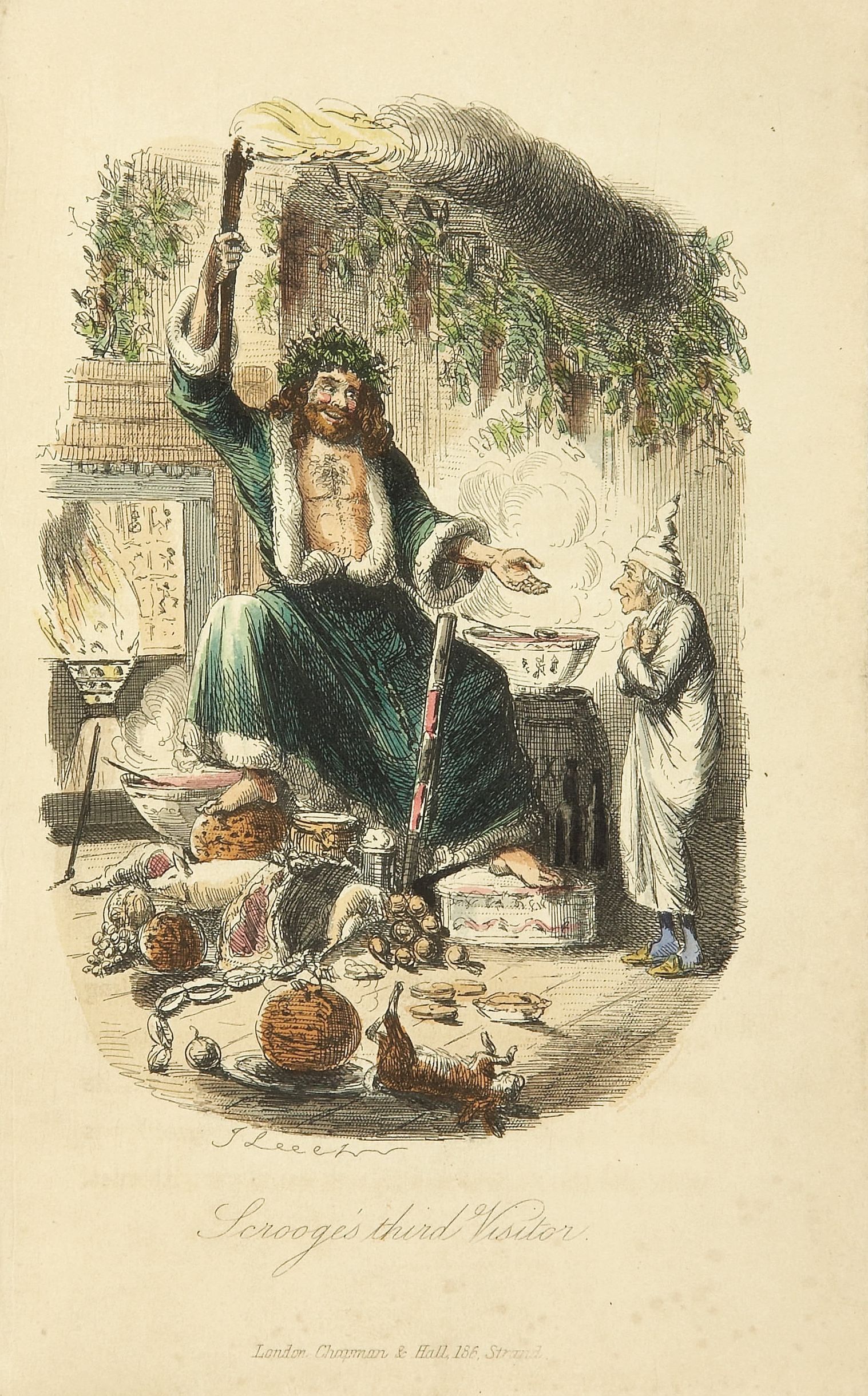
Am I the only one who thinks the Ghost of Christmas Present is kind of hot?

Click the image above to see a larger version of the first-edition image.

Saturday, December 24, 2011

Photo of the year 2011


This photo gets my vote for photo of the year 2011.

An interesting aspect of this photo is that Obama is the shortest figure in the image. If you didn't know who the people in the room were, you might expect the bald blueshirt in the center with the folded arms was in charge, or the guy in the military uniform.

But the reason it really works is because Obama is isolated - his head has the most negative space around it of anybody in the room; and his head is in line with the corner of the room, which is lighter than the rest of the two joining walls.

But if you do know who these people are, it also doesn't hurt the structure of the image that Obama is at the apex of a triangle formed with the two other most famous people in the room, Joe Biden and Hillary Clinton.

And finally, even if she was only stifling a cough, as she said she was, Clinton's covering her mouth adds alot of drama to the image especially if you know that what they are watching is the assassination of Osama bin Laden.

Friday, December 23, 2011

The Girl with the Dragon Tattoo book

THIS POST CONTAINS SPOILERS ABOUT THE BOOK "The Girl with the Dragon Tattoo"


I decided to acclimate myself to the violence of the movie The Girl with the Dragon Tattoo by reading the book first. It was a pretty fast read and not as gruesome as I feared, although there were a few bits that were pretty horrible and I quickly skimmed over descriptions of nastiness.

I expected to find the book in the bookstore's Mystery section, but it was instead in with Literature, which doesn't seem accurate, although it's true that the main mystery of the book turns out to be actually a subset of a larger story about the nasty world of high finance. I wonder how much of that will be edited out of the movie.


Some observations:

  • I don't remember where I read someone whinging about Daniel Craig being cast as Blomkvist, but they're wrong - he's perfectly cast. The character isn't an out of shape slob, as I was given the impression. There actually is very little description about him other than he has blond hair and is in his mid-40s. He smokes, but he also jogs and when he's being shot at his old military training kicks in.

  • It's also been said that Blomkvist is very different from James Bond, and of course Craig played Bond. But actually, as far as the ladies are concerned, Blomkvist is very much like James Bond. The book takes place over the course of a year and Blomkvist has an ongoing sexual relationship with three women during that time - with his long-standing friend-with-benefits publisher of his magazine Erika Berger - she's married but it's an open marriage; one of the members of the family he's been hired to write about, Cecelia Vanger - who seduces him; and Lisbeth Salander who just walks into his room and proposes they have sex - which he agrees to after first suggesting that maybe they should just be friends. This is only believable if the 40-something man in question is as attractive as Daniel Craig.

  • A favorite Swedish expression, apparently, is "the back of beyond" - a phrase that keeps popping up as a description of remote places of which there are several in the book.

  • The Swedes buy IKEA furniture at least as much as Americans do.

  • And they really like those damn lingonberries. Blomkvist makes a dish with lingonberries at one point. They're always shovelling that stuff at you if you eat at the IKEA cafeteria. They appear to like it best with meatballs.

  • Larsson is a big fan of Pippi Longstocking (as am I) and said she was an inspiration for Lizbeth Salander. Although Lizbeth has a very different personality from Pippi. One thing they do have in common is the fact that Lizbeth is actually a red-head, like Pippi - it's mentioned in passing in the book - but Lizbeth dyes her hair black.

  • Steig Larsson's description of computers and hacking is pretty impressively technical, although out of date since the books were released in the mid-2000s.

  • Awesomely, Larsson was a total feminist. The Swedish title of the Dragon Tattoo book was "Men Who Hate Women" and at the beginning of each section if the book there is a fact about violence against women in Sweden. For instance:
    PART 4
    Hostile Takeover
    July 11 to December 30
    Ninety-two percent of women in Sweden who have been subjected to sexual assault have not reported the most recent violence to the police


  • I couldn't help feeling bad when reading this section of the book, where Blomkvist is explaining that it isn't necessarily his fault his employer had a heart attack:
    Henrik had severe blockages in his arteries. He could have had a heart attack just by having a pee.
    Or climbing up seven flights of stairs.

    Larsson died at the age of fifty, when he had a heart attack after climbing seven flights of stairs when his office building's elevator was broken. If only he'd paid attention when he was writing those words and had his own arteries looked at.


Maybe he should have had more lingonberries.

Wednesday, December 21, 2011

the paradox of high-heeled shoes

I have no problem with wearing something because it might help you get laid. So I have no problem with high-heeled shoes as a sexual aid. But why would you wear them to work - unless your job is a prostitute?

I assume that much like traditional Chinese foot-binding, high heeled shoes are meant to indicate a woman's lack of utility - her job is to be decorative. Obviously there are degrees - in most cases, anyway, high-heeled shoes don't permanently cripple a woman, the way foot-binding did. But clearly they are a form of hobbling to indicate that the woman wearing them is above manual labor or anything brutish.

A woman in high heels is a lady, too dainty and refined to allow all of her foot to come in contact with the ground. She must tippy-toe around with her heels elevated, propped up in some cases by a slender stick.

I think very high heels are grotesque and I've seen women in the summer wearing them and it makes their feet hideous, no matter how nicely they've been pedicured - the pressure exerted on a foot standing on tip-toe makes the veins on the top of the foot pop out. Ew.

But even more so, high heeled locomotion tends to be extremely loud, especially on the polished floors of office buildings. There was a woman in high heels walking down the hall behind me today and this dainty fairy on her tip toes sounded like a giant plow horse threatening to run me down. And there are times when the noise of a woman wearing high heels while walking on a hard surface actually hurts my ears. And these women seem utterly oblivious to the paradox of the stupendous clop-clopping of the refined lady.

Tuesday, December 20, 2011

Fool me once, shame on...

I was reviewing the Daily Show archives which go all the way back to 1999.

Who could forget this classic episode from September 18, 2002?

The Daily Show With Jon StewartMon - Thurs 11p / 10c
Fool Me Once
www.thedailyshow.com
Daily Show Full EpisodesPolitical Humor & Satire BlogThe Daily Show on Facebook


But it was the following segment with the pillows and Mo Rocca (I miss Mo Rocca) that really killed me.

The Daily Show With Jon StewartMon - Thurs 11p / 10c
Shame On You
www.thedailyshow.com
Daily Show Full EpisodesPolitical Humor & Satire BlogThe Daily Show on Facebook

Monday, December 19, 2011

Poetry facts

Tomas Tranströmer is having a good two weeks: On ­December 10, the 80-year-old Swedish poet was officially given the 2011 Nobel Prize in Literature in Oslo, and on December 19, Farrar, Straus and Giroux will publish a new edition of his verse. To get to this moment, he triumphed o’er what are perhaps the longest economic odds in the arts.

THE WASTELAND
Estimated poetry M.F.A.’s awarded, according to M.F.A.-world blogger Seth Abramson, in …
2001: 700
2006: 1,000
2011: 1,400
Approximate number of jobs available to teach M.F.A. programs: 750

more poetry info...

Sunday, December 18, 2011

"The Artist" is not actually very good

What the hell is wrong with people? I saw "The Artist" today and it was incredibly mediocre. There were some nice moments but mostly it was a complete snooze - or as one of the very very few accurate reviews said: THE ARTIST Is So Minor It Barely Exists:
Shockingly empty, mostly bland and often kind of boring, The Artist is a fine technical exercise but offers little else beyond the gimmick of a silent film in 2011. Worst of all, The Artist doesn’t even make a particularly convincing argument about why we should care for silent film.
And I mean, not even the New Yorker or the Village Voice got this right - they both heaped on the praise. But of course their reviews were by full-time professional film critics who just adore any movies about making movies because they can play "spot the homage."

What I don't understand is why anybody who doesn't get a paycheck from watching movies would think this was anything more than dull and predictable. I couldn't wait for this to get to its final predictable denouement.

Seriously, I've seen episodes of The Little Rascals that were more interesting, better plotted and more nuanced than this.

Saturday, December 17, 2011

Why this monologue will be awesome

Carolyn Paine's Nutcracker Suite and Spicy was very good today, and apparently they're going to have some press.

Meanwhile, directly after the 2PM performance I got some video clips of Carolyn for her monologue, which is all about her exasperation with doing the Nutcracker every year - apparently all ballet dancers become fed up.

It is clear from this brief unedited clip alone that this will be a truly awesome monologue:

Friday, December 16, 2011

busy weekend

Wow what a busy weekend this is.

First I'm off to Hartford CT to video my friend Carolyn perform in her ballet troupe's Sweet and Spicy Nutcracker - I'm creating a video of the monologue about the Nutcracker that I nagged and nagged Carolyn to write (first described here on this blog) and which she finally wrote.

They perform at the Wadsworth Atheneum, and with any luck I'll also have time to drop in on Mark Twain's house, again - it's only a mile and a half away.

Then it's back to NYC for a movie with my friend Marjorie and then finally Bruce's performance in THE EIGHT.

sick of LYSISTRATA

LYSISTRATA is based on denial of the actual status of women in ancient Greece.

The premise of Lysistrata, written in 411 BC by Aristophanes, is that Lysistrata convinces Greek women to go on a sex strike to pressure their men to end the Peloponnesian war.

This is based on the entirely wrong notion that women in ancient Greece could refuse their husbands sex. The play briefly touches on the issue:
CALONICE

Bah, proverbs will never warm a celibate.
But what avail will your scheme be if the men
Drag us for all our kicking on to the couch?

LYSISTRATA

Cling to the doorposts.

CALONICE

But if they should force us?

LYSISTRATA

Yield then, but with a sluggish, cold indifference.
There is no joy to them in sullen mating.
Besides we have other ways to madden them;
They cannot stand up long, and they've no delight
Unless we fit their aim with merry succour.


Yeah, OK. Before or after he beats the shit out of you? Or he could just throw her out of the house. Wives in ancient Greece were financially dependent on men.

Men have been free to force themselves on wives throughout all of recorded history up until the middle of the twentieth century. There was no recognition of marital rape. And in fact there are places in the world, right now, like Afghanistan where women are expected to marry their rapists.

And of course Greek men could also have sex with slaves, prostitutes and with each other without anybody making much of a big deal about it.

If you think LYSISTRATA is comedy gold you'll love the play MR. THOMPSON'S JIM, about an American slave who convinces other slaves to go on a work strike in order to end the War of 1812.

And as far as the premise of LYSISTRATA JONES, what the Chicago Tribune said:

Without some viable equivalent of something big to play for, "Lysistrata Jones," its amusements and imagination aside, plays very thin and contrived — albeit with thick Broadway prices — especially since the show never really explains why Lissy and her short-skirted, fun-loving posse care so much about those boys winning at hoops in the first place.

Thursday, December 15, 2011

HO HA

Christmas has been promoted as a holiday of goodwill and kindness and magic and so of course there are people who think it's cutting edge to do plays about Christmas that are ugly and crass.

My friend Bruce is performing in THE EIGHT: Reindeer Monologues which I haven't gone to see yet, and really don't want to, although I guess I will have to, in order to support Bruce.

According to its author's web site THE EIGHT has been around for almost twenty years. It is extremely popular and by the description on the author's site, a particularly nasty piece of business:
A dark, dark Christmas comedy. Scandal erupts at the North Pole when one of Santa's eight tiny reindeer accuses him of sexual harassment.

As mass media descends upon the event, the other members of the sleigh team demand to share their perspectives, and a horrific tale of corruption and perversion emerges, which seems to implicate everyone from the littlest elf to the tainted Saint himself.

With each deer's confession, the truth behind the shocking allegations becomes clearer and clearer. ...and murkier and murkier.

Yeah, hardy har har.

At least this play has the distinction of being fairly original when it was first written a generation ago. But unfortunately so many people out there writing plays still harbor the illusion that making Christmas nasty, ugly and crass is all kewl and edgy.

No, you assholes, it's not.

And thanks to this ugly Christmas meme, when I did a call for "winter holidays" for the December play of the month for NYCPlaywrights, MOST of the plays that deal with Christmas are in the ugly Christmas mode. Let's see... we have the following "Christmas" plays:

  • Two brothers let mom die on the floor on Christmas eve
  • Blitzen has been downsized and is waiting tables
  • Santa's workshop is a Chinese sweatshop
  • Someone is murdered on Christmas eve
  • Some people kill Santa's reindeer, replace Mrs. Claus with a hoe
  • Santa is a "tyrannical drunken overlord"


Each one of them went right into my computer's trash bin.

Wednesday, December 14, 2011

New Yorker parity report - December 19 & 26, 2011

The New Yorker's parity rate jumps to 30% this week. It's a double issue, which they often do at the end of the year.

The New Yorker Parity Report
A regular report on the gender parity - or lack thereof - of the current issue of The New Yorker based on table of contents by-lines
Includes fiction, non-fiction, poems. Does not include illustrations.


A score of 50% means that half of all writers in the issue are female.
A score of greater than 50% would mean more female than male writers. This never happens.


Parity change from previous week: +11%

December 19 & 26, 2011

Total writers: 23
male: 16
female: 7
gender parity score: 30%

Last week's score
Total writers: 21
male: 17
female: 4
gender parity score: 19.05%

Tuesday, December 13, 2011

by popular vote...

This is without a doubt the most well-liked thing I've ever said on Facebook.


But then Dahlia Lithwick has lots of friends.

Monday, December 12, 2011

PAINTING CHURCHES - pretty good


This post contains spoilers about Tina Howe's PAINTING CHURCHES

I didn't think I was going to like PAINTING CHURCHES any more than I liked LEMON SKY. Certainly I'm more from the social class that Wilson writes about than the one Howe writes about.

I took a master class with Howe last year (thanks to NYCPlaywrights getting free tickets) and she reminded me of my aunt the nun - tall, thin, fussy, prissy and a bit superior. Although my aunt didn't come from Howe's class either in spite of the fact that my mother's family did well financially when my grandfather was a Teamsters leader in the 1950s. And my grandfather's family was pretty well-to-do. I think my aunt the nun got a small taste of the finer things as a young woman and never forgot it, even when she became a nun.

I remember as a teenager staying with my aunt at her convent for a week, along with two girl cousins around the same age (they were trying to recruit us) and very much appreciating my aunt's top-of-the-line stereo system. I got my first taste of Broadway musicals - FIDDLER ON THE ROOF oddly enough given that I was in a convent. I guess the Church could afford to pay the nuns a decent wage back before their coffers were depleted thanks to all the sexual abuse lawsuits of the 1990s and beyond.

An appreciation for fine things is a trait my mother never shared with Aunt Carmelita (that is her actual name, her nun name is Sister Marie Martin) - my mother's idea of fine dining, for example, is getting a discount coupon to the Penn Queen Diner in Pennsauken NJ. And she always bragged that she was able to pass English lit tests in high school by reading the "Classic Comics" version of the great novels she had been assigned to read. My family are decent people but for the most part complete Philistines.

My aunt also tried to recruit my mother into the convent, but my father talked her out of it.

The family in PAINTING CHURCHES, an older couple and their adult daughter, are rolling in dough. The working plot is that the old couple are packing up to move to their vacation home on Cape Cod to live there year round, and the daughter wants to paint them before they go - although the emotional plot is that the daughter discovers that her father is losing his marbles and her mother is suicidal or at least depressed, contemplating a future of taking care of her incapacitated husband.

When this play was first written in 1983, the topic of the sorrow and the pity of Alzheimer's disease was rarely discussed in movies or on stage. Things have changed in almost 30 years. Certainly NYCPlaywrights members came up with endless variations on that theme for their play readings until I was good and sick of it.

I actually wrote a play in reaction, THE BENEFICENT POWER OF REVENGE. Instead of sorrow and regret over their mother's decline, in my play two sisters actually prefer their mother with Alzheimer's because she's a much nicer person than she was before the disease, when she was bullying, caustic and all-around hateful. One daughter discovers that her mother thwarted her ambition to be a writer by failing to give her an acceptance letter to a writers' colony. And when a doctor gives the mother a new trial drug that reverses the symptoms of Alzheimers' (this is science fiction obviously) her bad personality traits return. In the end the thwarted writer daughter doesn't kill her mother, exactly, she just stops forcing the mother to take her anti-Alzheimer pills and as a result the mother ends up drowning. It's an unusually grim subject and approach for me, but that's how fed up I was with Touching Stories of Alzheimer's Disease.

So when I realized that PAINTING CHURCHES deals with the subject I was prepared to hate it, but in the end I didn't. For a couple of reasons: one is because the old couple is so vividly and entertainingly drawn, it was fun to watch them. And two because the father's mental problems aren't fully displayed until towards the end - he seems as though he might be an absent-minded professor for most the play, so it's something of a shock when it's revealed that he's incontinent. Not just revealed but actually shown on stage - we don't see him peeing, but we see the wet spot on his pants. Not that I want to see old guys with pissy pants, but it's an effective way to portray his decline - it's showing, not only telling. Wow, what a concept.

There is some telling in PAINTING CHURCHES but a flip of YELLOW SKY - only 20% tell and 80% show, which I am sure is part of why it works better.

It's not my favorite play of all time - it's under-dramatic for much of it and the daughter is nowhere near as vivid as the parents (In his positive review Frank Rich blames the actor playing the role) but I was impressed by the depth, subtlety, nuance and gentle humor of the play.

Nice work, Tina Howe. I'm sorry you reminded me of my aunt the nun.

Sunday, December 11, 2011

Just about to give up on Lanford Wilson


This blog post contains spoilers about Landford Wilson's LEMON SKY

I just read LEMON SKY and very much dislike it. I don't despise it the way I despise TALLEY'S FOLLY, but I like it less than BURN THIS, which I didn't like very much, but at least you watch people do things onstage. LEMON SKY is characters talking at the audience half the time.

You know how people in theatre are always banging on about "show don't tell"? Well LEMON SKY is pretty much 80% tell and 20% show. And yet most theatre people adore and revere Lanford Wilson. And no, that's not exaggeration. Here's what Frank Rich said about Wilson in his 1985 review of LEMON SKY:
A memory play in content and form, ''Lemon Sky'' reminds us that Mr. Wilson is our primary heir to Tennessee Williams.
Just as unbelievable:
If you have any doubt about the magnitude of the loss we suffered when playwright Lanford Wilson died this past March, Keen Company's heart-stopping production of his 1970 play "Lemon Sky" makes it all too abundantly clear.


This review gets it right. Especially this part:
Wilson takes his sweet time in getting to anything like drama, preferring to let his people gab away for nearly two hours about this and that. (This is a not-unusual feature of Wilson's works; on a good day, it got him compared to Chekhov.) His character portraits are rendered with a great deal of texture, but, when the constantly delayed action finally erupts into open conflict, the result is frantic and unbelievable, a burst of melodrama that comes out of nowhere.

Wilson seems to have been exploring the parameters of the standard dysfunctional family play, self-consciously toying with its conventions to see if it could yield any new insights or feelings. At the time, it must have seemed like an interesting, modernist way of addressing a potentially stale format. Seen today, however, the barrage of direct address and dearth of drama is more than a little wearying.
I was weary just reading it. Watching this on stage must be excruciating - in other words, much like TALLEY'S FOLLY.

And one more thing - the blurb on the back of the version of the play I read says:
...In the end... Alan is driven away once more, embittered by the knowledge that he must live without the father he so desperately wants and needs.
It's an interesting premise, and gave me some hope for this play, but in order to feel Alan's loss it would help if his father wasn't relentlessly portrayed as an asshole from the very beginning of the play. I mean, it's sad his father is an asshole, but since he never knows him any other way, it's not like he has any illusions that he's missing out on knowing a great guy, but now is estranged because he's gay. No, a premise is not a play.

Maybe I'll like BALM IN GILEAD or HOT L BALTIMORE - but at this point I doubt it.

Saturday, December 10, 2011

did I make the cover of the New Yorker?


Ironically the angel's hair is frizzed out in a way that I call "the hair of evil" and always do my best to keep my hair from doing that. *sigh*

rock on you great Danes!


I adore classical music flash mobs.

So many great moments here but my favorites are clarinet dude and the two blond violinist dudes rocking out.

Also, there appears to be a store in this train station called "OK, sa far I en burger" which Google cannot find, but Google Translate says it means "OK, said the father of the burger."

WTF?

Friday, December 09, 2011

A whole hour of Krugman!


Watch live streaming video from nytimesopinion at livestream.com

Thursday, December 08, 2011

New Yorker parity report - December 12, 2011

The New Yorker slides down to a 19.05% parity rate, with the same number of writers, 21, but with two fewer women for a total of four women writers. They made up for two poems by women last week with three poems by men this week.

The New Yorker Parity Report
A regular report on the gender parity - or lack thereof - of the current issue of The New Yorker based on table of contents by-lines
Includes fiction, non-fiction, poems. Does not include illustrations.


A score of 50% means that half of all writers in the issue are female.
A score of greater than 50% would mean more female than male writers. This never happens.


Parity change from previous week: -9.52%

December 12, 2011

Total writers: 21
male: 17
female: 4
gender parity score: 19.05%

Last week's score
Total writers: 21
male: 15
female: 6
gender parity score: 28.57%