Sunday, April 22, 2012

Happy Birthday Shakespeare

I heard from the Shakespeare Birthday Project people recently:
We created a site that linked to all these lovely blogs and video blogs, which essentially acted as a giant birthday card to the bard. Last year you contributed to this project with blog post that we thought was rather fantastic!

...We hope you will be involved again this year. You can publish your post anytime between April 22th - April 28th - with the 23rd being ideal, as that is, of course, the Bard's actual birthday.  
With flattery like that how could I say no? In any case I enjoyed writing it immensely.

They didn't know I run NYCPlaywrights - they were pretty happy when I offered to post info about their project on the web site.

This year I plan to write about the consolation of writing sonnets in the Shakespearean mode. I'll publish that April 23.

Saturday, April 21, 2012

I am the theater Mary Poppins.

Someone I worked with on a recent theatre project complimented me (I think) in an email:
You are the theater mary poppins!

But really I always identified more with the Suffragette Mrs. Banks in the movie, played by Glynis Johns.

No song in that movie can beat "Step in Time" but I am fond of Mrs. Banks's song "Sister Suffragette" (Mrs. Banks makes an appearance in "Step in Time" - when the playfully rioting chimney sweeps see Mrs. Banks come in wearing her sash they make that into one of the lyrics of the song: "Votes for women, step in time!" And soon Mrs. Banks is joining in with them, shouting "votes for women!" Such a naked display of solidarity - in a Disney movie yet -  always melts my left-wing, feminist, granddaughter-of-a-labor-leader heart.)

I get a chuckle out of the opening lyrics of "Sister Suffragette" especially the way she makes "as a group" rhyme with "rather stupid."

We're clearly soldier in petticoats
And dauntless crusader for women's votes
Though we adore men individually
We agree that as a group they're rather stupid 


Fun facts - Glynis John later played Diane Chambers' mom on "Cheers", and in the picture on this post she's with Hermoine Baddely (on the left) who played Maude's maid Mrs. Naugatuck.

Even funner fact via Wikipedia!
Mrs. Banks' four "Votes for Women" sashes from the film have all survived and are in perfect condition. One can be seen being "pulled out" of Richard M. Sherman's "special musicians' trunk" on the Musical Journey seen on the 2004 DVD release.
Oh wow, wouldn't I just love to have one of those sashes for my very own. I wonder how much one costs.

Friday, April 20, 2012

Thursday, April 19, 2012

OH THESE TIMES! A review

I got hold of the book Two Comedies of Catherine the Great and have read the first comedy, OH THESE TIMES!

Look out, this review contains spoilers.

Well, it's not the worst play I've read, and in any case I'm not a big fan of Restoration Comedies and this play is along those general lines, minus the bawdiness and double-entendres. But the cast list is in the standard name-signifier RC mode:
Mrs. Sanctimonious
Mrs. Tattler - sister of Mrs. Sanctimonious
Mrs. Marvel - friend of Sanctimonious and Tattler
Khristina - Sanctimonious’s granddaughter
Mavra - Sanctimonious’ s maidservant
Mr. Notshallow
Mr. Milksop
There are some amusing monologues and dialoges from the characters, some of them along the lines of attempts at social satire, as in this passage:
                       MARVEL
If I had a daughter, I’d have fewer cares. Why should a girl learn reading and writing; why does she need to? The fewer things a girl knows, the fewer lies she’ll tell. My mother forced me to swear I wouldn’t take pen in hand until I was 50 years old. What’s more, they say that these days in Petersburg even a girl can study anything - may they have good luck!

Catherine was very much in favor for education for girls - one of the reasons why she's a "the Great" - she founded the Smol'ny Institute, Russia's first girls' school, in 1769.

The characterizations of the three older women, Sanctimonious, Tattler and Marvel are vivid and entertaining in spite of - or because of - their general nastiness. The others, except Mavra, not so much. Khristina doesn't actually care, one way or the other if she marries Milkshop although she allows he's physically attractive. Milksop isn't especially Milksoppish, not in the way that I understand the word. And Mr. Notshallow isn't especially deep, he's rather more like the Basil Exposition of the play.

But C the G really drops the ball when it comes to plot, which is basically: Milksop wants to marry Khristina, Notshallow is trying to help him. When Milksop inadvertently laughs at the three older women's superstitions they turn against him and Notshallow and break off the engagement. Mavra helps patch things up by telling Mrs. Tattler that Milksop thinks she's pretty, so Tattler agrees to speak in favor of the marriage to Sanctimonious. After much extraneous speechifying, Sanctimonious agrees to allow the marriage. Then Mavra gives us the moral of the story:
                                                MAVRA
Here’s how our century is going! We condemn, we judge, we mock. We speak in spite of everyone and everything. But what we don’t see is that we ourselves deserve laughter and condemnation. When our prejudices displace common sense, our own vices are hidden from us. Only the mistakes of another are visible. In the eye of a neighbor, we can see a speck of sawdust, but in our own eye we don’t see the plank.
The end.

In spite of Sanctimonious being first in the character list, Mavra is the heroine as well as the epilogue chorus, and a force for good in the play - it is revealed that she taught Khristina how to read and write, in secret, against the wishes of Mrs. Sanctimonious, and it's she who manages to get Khristina and Milksop together. Mavra claims that she does it out of love for Khristina, but since Khristina is so lukewarm about Milksop it hardly seems worthwhile.

Catherine could have given Mavra a motivation. I would say that maybe we're supposed to discern it from the plot itself, considering that in addition to her other nasty traits, Sanctimonious is a huge bitch to her servants, especially Mavra:
                                            MAVRA
Once, she flung her prayerbook at me, and knocked my head so severely that I had to lie down for a week: and why? Only because I had come during Evensong to announce to her that a merchant was here after his money, money she’d borrowed from him at 6% and lent out for interest at 16%. “Accursed heathen,” she cried at me, “Coming at such a time? You are like Satan, tempting me with worldly vanities - now, when all my thoughts, removed from the cares of this world, are on repentance.” Then, screaming in a great rage, she threw the book at my temple. Look, there’s still a mark - I cover it up with a beauty spot. She’s a very strange person - I can’t get used to her ways.

So Mavra could clearly be motivated by the hope that if her friend Khristina is married and sets up her own household, she could have a chance to work as a servant for her instead of Sanctimonious. But she never says that. If this was a contemporary play I might believe that we're expected to infer this, but that would be too sub-textual and there is no sub-text whatsoever in this play. Everybody declaims exactly what they are thinking at all times.

It's interesting that a servant is the force for good in the play but maybe not so surprising - Catherine was well-acquainted with  servants - that's mostly who her friends were. But she actually didn't socialize with the members of the Russian bourgeoisie which is what Sanctimonious and company are.

The real shame is that Catherine almost had something good. We've already seen how "meh" Khristina is about Milksop, but then Mrs. Marvel (I think her name is a reference to her extreme superstition, it's definitely not about how marvelous she is) mentions how gorgeous her 18-year-old son Nikolashka is (Khristina is 15 and also gorgeous) and how he's barely literate - as is Khristina, having been tutored on the sly. What a perfect set-up for a plot twist - they have so much in common why couldn't Khristina and Nikolashka have met and fallen in love? It would have provided much clashing between Sanctimonious and Marvel, to start with.  And the play as-is is only about thirty minutes long, the new plot twist could have made it a respectable 2-hour full-length piece.

But no, she blew it - and in fact the whole section where Mrs. Marvel talks about her son and other aspects of her life does nothing at all to move the plot along, as the play stands. What a waste.

But as the Empress of Russian, Catherine could be sure that anything she wrote would be produced. It's good to be Queen.

Next up, one of these days, THE SIBERIAN SHAMAN.

Wednesday, April 18, 2012

Tuesday, April 17, 2012

blogging as therapy

Apparently blogging has been found to be theraputic for teenagers.

It also works for those of us who are not teenagers - especially if you combine it with posting poetry on the blog.

Of course there's always the chance that a gang of bullies will see that as a vulnerability and say, post a Facebook page to attack you for your therapeutic efforts. If it happened to me with a gang of middle-aged bullies there's no doubt it can happen to teenagers.

How I dealt with that was to write a play about it. Which was also therapeutic. Win!

Monday, April 16, 2012

New Yorker Parity Report - April 23, 2012

Slightly higher than usual but still of course a comfortable distance from parity this week. I was intrigued to see an article on Alison Bechdel - I wonder if they mention the Bechdel test? Certainly I've done my part to raise awareness of it with the NYCPlaywrights April Play of the Month. I could read the issue online and find out now, but I'm waiting for the print edition - I prefer to read the hard copy whenever possible.


The New Yorker Parity Report

A regular report on the gender parity - or lack thereof - of the current issue of The New Yorker based on table of contents by-lines
Includes fiction, non-fiction, poems. Does not include illustrations.


A score of 50% means that half of all writers in the issue are female.
A score of greater than 50% would mean more female than male writers. This never happens.


Parity change from previous week: +5%

April 23, 2012

Total writers: 22
male: 15
female: 7
gender parity score: 32%

Last week's score
Total writers: 26
male: 19
female: 7
gender parity score: 27%

Sunday, April 15, 2012

Theresa Rebeck on stupid postmodernism

I just discovered this piece by Therese Rebeck from 2009 and it's excellent. 

I haven't blogged about Mac Wellman and his postmodern theories on playwriting recently, but had to post this because Rebeck totally nails it here:
I seem to be constantly confronted by theater professionals who are more or less annoyed by the prospect of structure. One time I was at a wedding reception, for crying out loud, and I got seated at a table with a really famous genius of the contemporary American theater who had directed a play I admired. He had deconstructed a well-known play but the essence of the original story was still there, and the artistry and strangeness of his interpretation was beautifully balanced within the original tale. When I told him so, he went into a drunken rage. "All that structure, all that story," he growled, pouring himself more wine. "What a nightmare."

"I love structure," I confessed. "I think it's beautiful."

"Yeah, the audience loved it too," he sneered.

OK, I condensed that conversation; there was actually more yelling and drinking involved. But the essence of the exchange is accurate: He was a great artist who looked down on structure and managed to admit that he looked down on the audience too.

The two seem to go hand in hand. One time a critic made fun of the "crowd-pleasing ending" of one of my plays. The play was a comedy and the review ticked me off. "What kind of an ending was I supposed to write for a comedy?" I asked my husband. "Something that made the audience really sad? It's a comedy."

"You promised me you wouldn't read those things anymore," he answered.

I, of course, lay the blame for all of this on postmodernism. Fiction writers got over their fascination with postmodernism -- why can't we? That stupid postmodern emphasis on image over content has slammed us right into a dramaturgy that willfully leaves the audience behind and then resents the fact that they don't "get it." Which leads us to the question behind the questions: Is theater a populist or an elitist art form? Is it an obscure poem that no one is meant to understand? Or is it television?

Like many theater artists, my answer is "neither. It's neither."

Structure is not our enemy, it is the form that makes content possible; it is the meaning that holds the image and imbues it with specificity; specificity is not our enemy; intellect without heart is not more, it is less and in the theater sometimes less is just less. Contemporary playwrights don't need to toss away all that has come before us, nor could we if we even tried.

Saturday, April 14, 2012

TALLEY'S FOLLY and the BECAUSE, UM….?” GIRL

I wrote a long critque about TALLEY'S FOLLY last August. Only recently have I found this Tiger Beatdown piece that identifies exactly what the Sally character in the play is - a Because...? Um Girl:
So then, of course, you have Eastbound & Down, where a man calls a woman a “bitch” and promises to “fuck her up (with some truth),” because she doesn’t want to immediately jump into a relationship with him, and her reaction to this is to dump her fiance and move to a new city with him about five seconds later, so he basically verbally abuses her into being his girlfriend, which, if we were encouraged to look into her motivations to the same extent that we’re allowed to examine the motivations of the other (male) characters on the show, would be some spooky tragic cycle-of-abuse bullshit – the show emphasizes that the only other characters who are drawn to him are deeply fucked up, I would take “deeply fucked up” as an answer here – but in the context of the show, it’s all cool. Because she’s not a person; she’s a plot point. Because she’s a woman.
Fear and contempt of women are the only motivating factors to write a character this way. In Apatow-Brand comedies, the girls who are not “Because, Um…?” girls are either bitches (wives; sexually unavailable women; professional women; ex-girlfriends) or sluts, typically of the crazy drunk variety. (Woody Allen, another prominent “Because, Um…?” writer, uses Manhattan to compress all of the above-listed “bitch” characteristics into a successful lesbian ex-wife, whom he hilariously confesses to having tried to run over with his car. HA! A man trying to murder a woman because she ended their relationship and/or is not heterosexual! It’s funny, ’cause that’s how a lot of women actually die!) Eastbound & Down takes this tack by having literally only two other female characters, a wife whom we’re encouraged to think of as an uptight bitch and a “fuckbuddy” whose only defining characteristic is that she is such a crazy drunk slut all the time. The “Because, Um…?” girl can only exist in the negative space created by this double bind. If women have standards, they’re bitches; if they don’t have standards, they’re sluts: try to write yourself out of this, and you find that the only feasible way to create a non-threatening female character is to give her no motivations or personality whatsoever, to turn her into a cipher who provides love or sex simply because the plot demands it.
That describes the Sally character in TALLEY'S FOLLY perfectly. She really has no motivation or personality (in spite of claims by the Matt character that she has a temper - which we never actually see) she is there to provide love/sex because the plot demands it. Because Matt suffered from anti-Semitism and deserves a consolation prize for that, no matter how personally obnoxious he is.

But here's the thing - I don't think anybody is claiming that the movies/TV shows discussed in the Tiger Beatdown article are great works of art - OK, except the films of Woody Allen, but the rest of it is generally understood to be a bunch of crappy bro-mance kind of movies, the Porky's of the 21st century. Raw meat to throw to misogynist adolescent men to make a nice profit.

But TALLEY'S FOLLY won a Pulitzer Prize. It's supposed to be High Art. And yet here we see a pure example of the "Because, Um...? girl - she is literally abused into being Matt's wife - stalked, cornered in a boathouse - he physically blocks her from leaving at one point - and then told that her community is a bunch of morons and her family members have stupid names.

Granted, TALLEY'S FOLLY was written in 1979 and there's been some consciousness-raising about stalking since then - but that doesn't seem to matter. The play is still produced to this day and nobody seems to be bothered by the fact that the hero of the play is a stalker and a bully. To date I've yet to meet anybody else in the theatre world who has a problem with TALLEY'S FOLLY.

So if our culture still treats TALLEY'S FOLLY as a touching love story and High Art, can we really be surprised that low-brow bro-mance comedies make free use of the "Because, Um...? girl trope?

Friday, April 13, 2012

Catherine was Great

How did I miss this for so long? I'm a fan of Mae West, my FB pal Linda wrote a play and has a blog about Mae West and have been doing research on Catherine the Great for over a year now towards writing a play (The Rimsky-Korsakov Affair) and yet I only found out about Mae West's show Catherine was Great yesterday.

It ran for less than a year and the critics didn't like it much. Wolcott Gibbs in the New Yorker (access to the New Yorker's archives makes a subscription to the magazine a huge bargain) said:
It is almost impossible to reproduce the special accent that has made Miss West what she is or to describe her queer, boneless method of locomotion, but while they can be very comic in a girl who is saying "Whyn't you come up and see me sometime?," they are something else in an actress apparently under the serious impression that she is Empress of All the Russias. They just don't seem very regal, I guess.
Actually what's most interesting about the page that this review appears is the cartoon that appears with it. I don't know what the device is that the guy is supposed to be holding - doesn't it look like an iPhone to you? This cartoon is from 1944. But of course it can't be an iPhone - it wouldn't be a very funny joke for someone to try to talk into it. And of course his ear bud is plugged into the power port instead of the audio port.


Thursday, April 12, 2012

la douleur du chat


The first one uses the first of the Trois Gymnopedies by Erik Satie.

Part Deux

Wednesday, April 11, 2012

New Yorker Parity Report - April 16, 2012

Back to the usual 1 out of every 4 writers is a female territory. If the critics columns weren't so completely male-dominated they might almost reach parity once in awhile.


The New Yorker Parity Report

A regular report on the gender parity - or lack thereof - of the current issue of The New Yorker based on table of contents by-lines
Includes fiction, non-fiction, poems. Does not include illustrations.


A score of 50% means that half of all writers in the issue are female.
A score of greater than 50% would mean more female than male writers. This never happens.


Parity change from previous week: +8%

April 16, 2012

Total writers: 26
male: 19
female: 7
gender parity score: 27%

Last week's score
Total writers: 21
male: 17
female: 4
gender parity score: 19%

Tuesday, April 10, 2012

Sonnet anniversary 2012

It's been a long time since I wrote a sonnet - not since last November. But I've traditionally had a sonnet review every year on the anniversary of my first sonnet and so...

I guess my favorite of this past year of sonnets is "Darling, the world is composed." I like the extended water metaphor - always a good choice for me, my first sonnet had one - and the 8-line long sentence that begins the sonnet:
Darling, the world is composed of endless
Fleeting phenomena in the ever-
Rushing stream of time where all are helpless
To stay howsoever we endeavor
The course of desire winding through veins
And all of the channels of perceivers
Each little vessel that haplessly strains
In passionate confluence, conceivers
Of infinities of concupiscence.
Cerulean eyes, adorable face
Breathing hard drowning in every sweet sense,
Here my love is senamensing's own place.
Underground but never ceasing to be
There flows your most ardent tributary.
I especially like the phrase "conceivers of infinities of concupiscence" - that's a very Schopenhauerian concept. And in fact the first fifteen words in the sonnet (save "Darling") I put into the mouth of the Schopenhauer character in my JULIA & BUDDY. It also includes the Indian word that I'm trying to turn into an English-language word, senamensing.

I talk about the therapeutic aspects of the sonnets in this one and again in Unrequited Love is Not Required.

I expect that since the unrequited love that was the primary inspiration for my sonnets has faded, I won't be writing many more - or any more. In any case, what Pushkin said:
Whom to love, whom to believe in,
On whom alone shall we depend?
Who will fit their speech and action,
To our measure, in the end?
Who will refrain from slander,
Who support us when we wander,
Be amused by our vices;
Who is never bored by us?
Never pursue a phantom,
Or waste your efforts on the air
Love yourself, your only care,
Estimable Reader: come,
No more deserving lover,
Or more fitting, you’ll discover.

Eugene Onegin - Alexander Pushkin

Monday, April 09, 2012

Catherine the Great documentary


Here is the first of five parts of the documentary that PBS did about Catherine the Great. It's pretty good really, they hit all the important points of Catherine's biography. They didn't mention her affair with Rimsky-Korsakov or many of her other lovers but they aren't important compared to bringing innoculation for smallpox to Russia or expanding Russian territory all the way to the Crimea. And that's just as well, more chance for me to make an impact with my play.

In spite of the general good quality, it's always curious to see what they left out. They show her with Stanislaw Poniatowski when they were young lovers. And later they show Catherine, decades later, with the king of Poland - and neglect to mention it is Poniatowski, whom Catherine had made king of Poland.

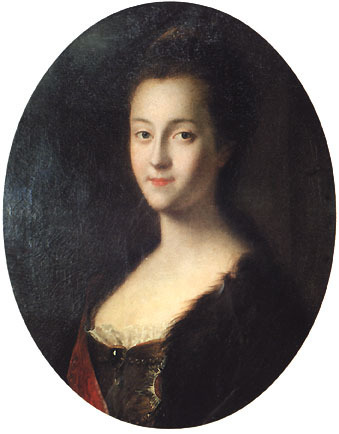
Also in books about Catherine you get the sense that she was surrounded by servants virtually all the time, but in the scenes of this documentary you rarely see servants. And although they show her aging throughout the documentary she doesn't gain any weight - and any later portraits of Catherine make it clear, in spite of the portraitist's obligatory flattery, that she put on quite a lot of weight in her later years. She was quite svelte in her youth, as can be seen by the portrait here, although even then she didn't look like Catherine Zeta-Jones, who played her in a movie in 2001. Oh well, that is the business we call show.

But - SCORE! - I located two translated plays written by Catherine the Great herself - she wrote over a dozen and have ordered them through the Queens library system: OH THESE TIMES and THE SIBERIAN SHAMAN. Reviews will be forthcoming, of course.

Sunday, April 08, 2012

more theatre gripes

The NYCPlaywrights April Play of the Month required that all plays pass the Bechdel test - which means that the plays - the ten-minute plays - have to have prominent female characters. And it's pretty clear that what alot of the people who submitted work did was simply change a male character into a female one. I can tell because there are a very high number of female characters that just happen to have male names in the submissions pile.

Another trick is to excerpt a scene from a full-length play and present it as a 10-minute play. I'm sure this contributes to, but isn't only responsible for plays that are a huge peeve of mine which I call "The Play Where They Talk About Something Exciting That Happened Some Other Place and Time." Or the short version "Reminiscence Plays."

Here is but one of dozens of samples submitted for the April Play of the Month - a mother and daughter reminisce about their husband/father and the mother tells the daughter that her husband, who had been in jail, told her he was in love with a man. Now that scene would have been interesting - instead we get this second-hand retelling of the scene. And technically this play doesn't even pass the Bechdel test since  the mother and daughter spend the whole time talking about the father, with a few minor conversational side-trips.

My other peeve - many of the submitters included bios bragging about all the awards they or the play they were submitting have won. That does not impress me - so many judges of plays can't tell shit from Shinola. One of the submitters went so far as to claim that he is "One of the world’s leading experts in short plays." And yet, strangely, the play he submitted was extremely mediocre.

Show biz - oy vay!

Saturday, April 07, 2012

Glengarry Glen Ross, etc.

I finally read GLENGARRY GLEN ROSS, David Mamet's Pulitzer Prize winning play and I wasn't especially impressed. Granted I'm not the most pro-Mamet person in the world, having called him, justifiably, a teabagger not to mention suggesting that he's losing his marbles.

I had to laugh when I started reading due to the Mamet-speak. I've been over OLEANNA backwards and forwards thanks to the necessity of defending my take on the play at various times, and the GLENGARRY characters all speak in Mamet-speak, just like the two characters in OLEANNA.

In fact one of the most striking aspects of Mamet's plays is just how little differentiation there is among the characters, but GLENGARRY makes it so obvious.

If you've read any advice on writing plays, you know that distinct character voices is one of the holy grails in the world of script writing - plays or screenplays. Here is one example of that kind of advice:
Giving Your Character A Unique Voice

An important part of creating a character is allowing them to have a unique voice. This means that anyone reading your screenplay would instantly recognise which character is talking, without even looking at the character tag!

You absolutely can NOT recognize which character is talking in GLENGARRY GLEN ROSS without some kind of reference. For instance, there is a scene where two of the salesmen are discussing robbing their office - after the office is robbed I had to keep flipping back to that scene to remind myself who was originally planning it.

And I was able to remember who Levine was because I knew he was played by Jack Lemmon in the movie version. 

And it's Mamet's ability to get important actors to perform in his plays, I submit, that is why his plays are considered important. But GLENGARRY GLEN ROSS had zero emotional impact on me - compared to DEATH OF A SALESMAN which absolutely did have an impact. Both plays deal with salesmen trying to make deals, a subject that is utterly without intrinsic interest, but I got to know Willie Loman enough to care about his death. I really didn't care, based on the script, if Levine succeeded or failed. However, I'll bet that with Jack Lemmon in the role, you do care, because Jack Lemmon is quite possibly the greatest movie actor of all time.

Another important difference between the movie and the play - the movie opens with a scene where Alec Baldwin - a movie-only character - explains what's at stake. In the play you gradually glean it through a long restaurant conversation scene. I found the play script pretty boring for the most part. I mean yeah, business is a nasty business and people get screwed and screw others all the time. Anybody who has to work for a living doesn't need to be told. But having some of the most important actors of the late 20th century be in the movie version of your play doesn't hurt one bit.

The play does have a few funny bits though - I thought this was especially amusing:
WILLIAMSON
Now I'm giving you three...

ROMA
Three? I count two.

WILLIAMSON
Three

ROMA
Patel? Fuck you. Fuckin' Shiva handed him a million dollars, told him "sign the deal" he wouldn't sign. And Vishnu too. Into the bargain...
I'm so glad Pacino turns out to be cast in this role - I hope they let him say that line in the movie, I can hear him saying it when I read it.

Oh wait, I just checked Youtube - they do keep that speech in - awesome.

I just thought that little piece of cultural color was amusing and a nice change of pace from just calling Patel a wog, as earlier in the script.

You almost care about Levine because he mentions his daughter a couple of times. We don't learn anything about her though - just that he has one. Mamet doesn't have time to let us get to know anything about her because really, do women count for anything but as a symbol of either sex or domesticity? Not in Mamet-land.

WAITING FOR LEFTY on the other hand, does deal with the taxi drivers who are considering going on strike and their relationships with the women in their lives - actual female characters appear on stage. And I thought that the character of Florence was amazingly vivid and distinctive. Here she is talking to her cab driver boyfriend:
FLORENCE
Hello, Honey. You're looking tired.
SID
Naw, I just need a shave.
FLORENCE
Well, draw your chair up to the fire and I'll ring for brandy and soda... like in the movies.
SID
If this was the movies I'd bring a big bunch of roses.
FLORENCE
How big?
SID
Fifty or sixty dozen - the kind with long, long stems - big as that...
FLORENCE
You dope...
SID
Your Paris gown is beautiful.
FLORENCE
(Acting grandly.)
Yes, Percy, velvet panels are coming back again. Madam La Farge told me today that Queen Marie herself designed it.
SID
Gee...!
FLORENCE
Every princess in the Balkans is wearing one like this.
(poses grandly)
SID
Hold it.
(Does a camera... Suddenly she falls out of the posture and softly goes to him to embrace him, to kiss him with love. Finally:)
SID
You look tired, Florrie.
FLORENCE
Naw, I just need a shave.
(She laughs tremendously.)
SID
You worried about your mother?
FLORENCE
No.
SID
What's on your mind?
FLORENCE
The French and Indian War.
I can't imagine Mamet writing a female character like that ever.

Even though the taxi drivers don't get nearly as many lines as the salesmen in GLENGARRY, we understand what is at stake for them much better. Which is why it's that much more stirring when they do strike at the end.

Of course the message of LEFTY is more stirring anyway -  that people can work together to improve conditions, whereas the message of GLENGARRY is that everybody is corrupt and/or mean, everything sucks and then you die. Which might be true but I don't consider watching representations of same a form of entertainment.


Friday, April 06, 2012

online conversations with skeezy guys

From an online dating site, of course:
NOTE: his online profile says he's a musician who plays lots of gigs.
SKEEZY GUY
Hi there beautiful...

ME
Hey - I certainly like your attitudes towards Republicans and bullshit!
:)
What are you doing this long weekend - playing around town?

SKEEZY GUY
Show tonight in Jersey... Nothing much this weekend... Taking it easy... Maybe looking to have some fun...
How about you?

ME
My weekend is completely open - I'm not used to so much free time. What do you like to do for fun?

SKEEZY GUY
Man, is that a loaded question.... Let's just say there's not a lot I'd say no to.... How about yourself?

ME
Let's make a night of it.
Let's go out in the fields and take off our shoes,
and walk through the grass.
Then we can to up to the falls.
It's beautiful up there in the moonlight,
and there's a green pool up there
and we can, uh, s-swim in it.
Then we can climb Mt. Bedford,
and smell the pines
and watch the sunrise against the peaks,
and we'll stay up there the whole night,
and everybody'll be talking
and there'll be a terrific scandal...
He didn't write back. Guess he's not a big fan of "It's a Wonderful Life."

Thursday, April 05, 2012

the things actors do


I have to give the cast of the NYCPlaywrights March Play of the Month alot of credit - they have to do alot of wacky things for this play. It always amazes me how fast some actors are at getting into character, especially since we usually do like one read-through and at most 2 - 3 takes per scene - but I have to run a tight ship -  invariably at least one actor out of any given play of the month cast will be in the middle of something and can only spare a few hours for this recording. I had Mike and Tony for three hours and Bruce, who is currently in a production of THE CLEAN HOUSE for only one.

Wednesday, April 04, 2012

New York City Serenade & other stuff

A very nice live version of the song from 1973 - only audio though... but well worth a listen...


An unusual version of Rosalita...


Spirit in the Night - live with video


I didn't know about this performance - it's pretty wonderful

Tuesday, April 03, 2012

Hopes may rise on the Grasmere, but Honey Pie you're not safe here

I have had my share of panic attacks - my last job was a virtual panic attack generator, the office environment was so poisonous - and when the job ended, my panic attacks decreased alot. A panic attack is a horrible thing, and mine were nothing like the poor woman writing in the April 2 New York Times.

I think it's significant that she mentions that during her wedding she did not have a panic attack, but once she was on her honeymoon they hit. Because panic attacks are fight-or-flight responses with no originating stimuli. Most people would feel safe in a hotel room in Hawaii, with the closest person in their life, but a wedding, well that is a fight-or-flight situation and she decided to fight. Because she knew what she was up against.

 I was like that at work - if I had to make a group presentation I would be nervous, but would not have panic attacks because I was up against something very specific. It was during big, long team meetings that I would suddenly feel the urge to flee - but there was actually nothing much going on - this was a meeting after all, that's pretty much the definition of most corporate meetings: nothing much happens. It's while your mind is on idle that the stresses and strains of working in an unfriendly, even somewhat hostile environment such as the one at my last job, that all the panic symptoms come out - the fear of what could happen - the endless possibilities of disaster, not the present specific probable disaster of a public speaking occasion. It's really hell.

But luckily my attacks have been much briefer and more manageable that the author of the Times article. And my play JULIA & BUDDY deals with panic attacks, and that was therapeutic too.

PANIC by The Smiths

Monday, April 02, 2012

New Yorker - April 9, 2012

The New Yorker was getting unusually close to parity last week, so to make up for it, the parity score is only a little more than half of last week's score. So don't get too uppity, bitches.


The New Yorker Parity Report

A regular report on the gender parity - or lack thereof - of the current issue of The New Yorker based on table of contents by-lines
Includes fiction, non-fiction, poems. Does not include illustrations.


A score of 50% means that half of all writers in the issue are female.
A score of greater than 50% would mean more female than male writers. This never happens.


Parity change from previous week: -13%

April 9, 2012

Total writers: 21
male: 17
female: 4
gender parity score: 19%

Last week's score
Total writers: 19
male: 13
female: 6
gender parity score: 32%

Sunday, April 01, 2012

Any deeper blue, you'll be playin' in your grave

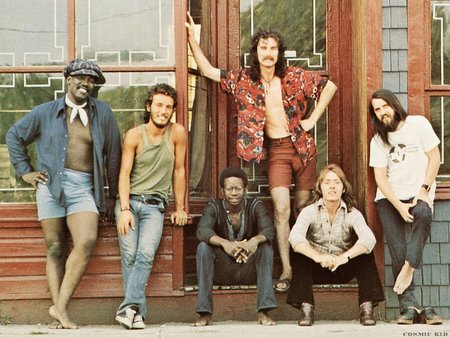
It cannot be said enough - Bruce Springsteen's first two albums - Greetings from Asbury Park NJ and The Wild, the Innocent and the E-Street Shuffle are perfect works of genius. He's never done anything as great, but then neither has almost anybody else. Every song on both albums are masterpieces, like mind-blowing masterpieces.

And it's so amazing that there are so few decent mid-70s video recordings of Springsteen concerts. Here is a decent version of Lost in the Flood from a British tour:


The music is the apotheosis of American popular music - jazz, blues and rock all rolled into one - with some Latin flavor thrown in for good measure. It was appropriate that the E Street Band of the time had two African American genius musicians on board - Clarence Clemons and Dave Sancious (Sancious might be the greatest rock pianist ever) seeing as how jazz, blues and rock were all appropriated from African American culture.


But it's the lyrics too, the perfect street poetry that makes this stuff just kind of ineffable:

"Hey man, did you see that, his body hit the street with such a beautiful thud..."

Unfortunately there's no embeddable version of the album track of New York City Serenade - there are several mid-70s live audio versions but the quality is pretty crappy. This is probably the best one currently available on Youtube:


Ironically this version is from the Main Line a venue right outside of Philadelphia, not NYC. But Bruce is a North Jersey shore boy which means he grew up equidistant from both Philadelphia and New York.

But the recorded version can't be beat - the live version loses the one-of-a-kind delicate interplay between the piano and the guitar. And again, the lyrics:

Billy, he's down by the railroad tracks
Sitting low in the back seat of his Cadillac
Diamond Jackie, she's so intact
And she falls so softly beneath him
Jackie's heels are stacked
Billy's got cleats on his boots
Together they're gonna boogaloo down Broadway
And come back home with the loot
It's midnight in Manhattan, this is no time to get cute, it's a mad dog's promenade
So walk tall
Or baby, don't walk at all

Fish lady, oh, fish lady, fish lady, she baits them tenement walls
She won't take corner boys, they ain't got no money, and they're so easy
I said, "Hey, babe, ah, baby, won't you take my hand, waltz with me down Broadway"
Whoa, mama, take my arm and move with me down Broadway, yeah
I'm a young man, I'm talkin' real loud, yeah, baby, walk it real proud for you
Ah, so shake it away, so shake away your street life, shake away the city life
And hook up to the train, ah, hook up to the night train
Ah, hook it up, hook up to the, hook up to the train
But I know that she won't take the train, no, she won't take the train
No, she won't take the train, no, she won't take the train
Oh, she won't take the train, no, she won't take the train
She's afraid them tracks are gonna slow her down
And when she turns, this boy'll be gone
So long
Sometimes you just gotta walk on
Walk on

Hey, vibes man, hey, jazz man, ah, play me a serenade
Any deeper blue, you'll be playin' in your grave
Save your notes: don't spend 'em on the blues boy
Save your notes: don't spend 'em on the darlin' yearlin' sharp boy
Straight from the church note ringin', vibes man sting a trash can
Listen to your junkman
Ah, listen to your junkman
Listen to your junkman
Oh, listen to your junkman
He's singin' (singin')
All dressed up in satin, walkin' down the alley (singin')
Singin', singin', sing, yeah, sing, yeah, singin', singin', singin', yeah, sing, yeah
(Singin', singin', singin') Ooh, ooh, ooh, oh, yeah
(Singin', singin', singin') Ooh, ooh, ooh, ooh, ooh, ooh, oh, yeah
(whispered)
Ah, shake it, downtown, watch it, oh, watch out for your junkman
Shake it, watch out, bah, ah, ah, watch out for your junkman
Ah, shake that guitar, shake that damn guitar, ah, watch out for your junkman
Ah, shake, talkin' 'bout it, ah, ah, come on, little girl
Watch out

Ooh, ooh, ooh
Ooh, ooh, ooh
Oh, ah, yeah
Oh, huh, oh, huh
Shake that damn guitar
Ah, watch out for your junkman
Oh, yeah
Oh, yeah
Watch out for your junkman
Uh, huh, uh, uh
Uh, uh, huh, huh, huh
Watch out for your junkman
Oh, watch out for your junkman

Saturday, March 31, 2012

PAINTING CHURCHES review

I finally got to see Keen Company's PAINTING CHURCHES - director Carl Forsman kindly gave me comps to the show - and I was right - it is a good play. I could tell by reading it, but it was confirmed by this production. I was choked up by the end - even though I already knew the plot. That is what a play is supposed to do - have some kind of emotional resonance.

I had the same feeling at the end of DEATH OF A SALESMAN and WIT. That emotional impact that sometimes sneaks right up on you. So few plays that I've seen have that kind of impact. Hell, most of the plays written these days don't even try. They're too focused on examining (really, celebrating) man's inhumanity to man or being cutting edge or portentous or making some kind of intellectual observation.

Plays that have a quiet but profound emotional impact like CHURCHES are not what gets produced. Which I think might be part of the reason for why plays by women are produced less often than plays by men, in spite of the fact that plays by women make more money than plays by men. Because the sensitive, subtle emotions evoked by plays like CHURCHES aren't all manly macho kewl. And the cast is two women and a man - it's just so horribly girly. Going to such a play might pollute a man with girl germs and sap his virility. Best go see a play by Adam Rapp - those have manly prostitute sex and violence and bodily fluids galore and are therefore much more prestigious.

Some of the reviews of Keen's PAINTING CHURCHES were pretty negative and I disagree with most of them. I do agree that the actor playing the daughter didn't seem to quite inhabit the character as she should - certainly not in comparison to the way Kathleen Chalfant and John Cunningham inhabited their characters. But as far as the set, which several reviewers bitched about - are they smoking crack? I thought the set design was just about perfect, especially considering the small stage the designer was given to work with. And the direction was just fine - it worked for the play, rather than draw attention to the direction itself. What a radical concept these days.

So never let it be said I hate all plays - I do hate alot of plays, but only because alot of plays are crap. When I find a good play, I like the hell out of it.

Friday, March 30, 2012

giant mammal fruit

Wikipedia makes this interesting observation about avocados and mangoes:

Co-evolution The avocado may be an example of an 'evolutionary anachronism', a fruit adapted for ecological relationship with now-extinct large mammals (such as giant ground sloths or gomphotheres). Most large fleshy fruits serve the function of seed dispersal, accomplished by their consumption by large animals. There are some reasons to think that the fruit, with its mildly toxic pit, may have co-evolved with Pleistocene megafauna to be swallowed whole and excreted in their dung, ready to sprout. No existent native animal is large enough to effectively disperse avocado seeds in this fashion. If so, the avocado occupies an ecological niche similar to that of the mango of Asia.[44][45]

This is a gomphothere.

Thursday, March 29, 2012

non-misogynist romance movies

I was looking at iTunes movie listings recently and was appalled to see that some hard-core misogynist movies are listed in the Romance category. Forgetting Sarah Marshall, for instance. I haven't seen the movie because it sounds like a huge reeking piece of misogyny - naturally coming from Judd Apatow - based on every review I've read. But if even half of what is described in this review at Tiger Beatdown is true, it is best if I don't watch the movie because if I did, I would have an irresistible urge to hunt down Apatow and every evil freak who green-lighted this movie.

I did, unfortunately, see Love Actually. I don't want to relive that experience. Read the NYTimes review of Love Actually to get some idea of how obnoxious and misogynist this movie is. And so many people think this is such a charming lovely Christmas movie. Morons. It's "romance" as conceived by evolutionary psychologists - a field of dreams for men of all ages, and a horrible nightmare for any woman over 30. You think I exaggerate? Compare these two scenarios from the movie:

Guy considered ugly in the UK goes to America where the women love his accent so much that he is taken back to an apartment to have a five-way - I kid you not - with them. And then he finds true love with one of them and goes back to the UK with her and another one in tow, to give to his buddy like some retarded sexbot souvenir.

vs.

Laura Linney, who should be horse-whipped for accepting this role, plays an American woman who can not have love ever again because her brother, a violent psychotic, has access to a telephone literally twenty-four hours a day at the psych ward he is committed to and therefore calls her all the time night and day. That's the only "love" that Linney's character gets - with a violent psychotic brother living at the worst psychiatric facility ever.

Apparently, once upon a time, romance movies with strong female characters weren't considered "chick flicks" and even men could admit to enjoying them. I expect this is because at the height of the age of the Patriarchy there was no question that women were inferior to men, so men could enjoy a strong woman character without feeling pussy-whipped. But no longer. Now that Patriarchy is on the defensive, the only way for a bro to enjoy a movie about romance is to ensure that women are humiliated, as in the Sarah Marshall movie, or humiliated (Emma Thompson's character) AND deprived of romantic love entirely due to being the slave of a psycho (Linney), while the all the male characters' dreams come true in Love, Actually.

That's how evil filmmakers are these days. I would have said "Hollywood" but Love Actually was made in the UK.

There are, however, the rare pro-woman, even, *gasp* feminist romances out there. The minority to be sure, which is why it's important to make a list. I decided to start making that list:

  • His Girl Friday - this is a feminist movie by accident - the Rosalind Russell character, Hildy, was originally a male but the director changed it. Also, ad-libbing was allowed so Russell hired a writer to give her bon mots to give her character. But even if by accident, I'll take it. Because it was originally written for a man, the character's trajectory is to want to get out of the newspaper business and go live in the sticks and settle down and get married, but can't because he's too good a journalist. They couldn't change that without ruining the story entirely so they were stuck with it - even for a woman. And bonus - the boring guy that Hildy ultimately rejects is Ralph Bellamy and she ends up with Cary Grant. Talk about a no-brainer.

  • The Little Mermaid - Katha Pollitt and I vehemently disagree on this one. Pollitt thinks that just because the evil character Ursula sings about how mermaids don't need to talk to get a man, and ends up right, it proves that The Little Mermaid is sexist. Pollitt didn't watch the movie very carefully because the reason that Prince Eric resists Ariel in spite of the fact that he thinks she's pretty and he likes her personality is exactly because she can't talk - and in his first woozy encounter with Arial, after she saved his life, he remembers she was singing. But even without her voice, Arial manages to communicate with Eric. But also, her character is filled with intellectual curiosity - she's virtually a mermaid archeologist, with a collection of human artifacts that she tries to figure out. She becomes attracted to Eric while on one of her expeditions to the surface, in defiance of her father, who hates humans. And perhaps most importantly of all, she is driven by shameless lust. This is rare enough in any movie much less a Disney movie. And in fact you really get a sense of progress when you consider that the last Disney fairy tale animation before this one was Sleeping Beauty, in which the title character, well, slept through virtually the entire movie. What a difference from Ariel. People who think the Little Mermaid is sexist are all wet.

  • Cassanova - was a delightful surprise. I rented this because I thought Heath Ledger was damnned cute, but I was prepared to grit my teeth through the interchangeable-sexbot view of women which I figured was inevitable with any story about Cassanova and wow, that was so not this movie! Instead the heroine is awesome - an 18th century proto-feminist philosopher. Cassanova falls in love with her and they end up on the road together as a traveling theatre troupe and the heroine becomes a playwright. Swoon. It's a total fantasy but so what? And on top of that, there's quite a bit of Catholic-church bashing throughout. Which makes this pretty much a perfect movie.
More non-misogynist romance movies to come...

Wednesday, March 28, 2012

BEAUTIFUL BOY finally


Well it took me forever to edit this NYCPlaywrights play of the month which we recorded on the subway, mainly because of the lousy sound quality. I will have to invest in some serious equipment one of these days. The best part of this is the actors facial expressions, which luckily don't depend on sound. And Val did a great job with the monologue, especially considering we had one read-through of the play in a diner just before hopping onto the subway, and considering that we were in the middle of a public subway car with other people and seemingly constant P.A. announcements. And Mike does great with his mini-monologue too - it's about the travails of being an actor.

Tuesday, March 27, 2012

New Yorker Parity Report - April 2, 2012

Well we are almost within hailing distance of parity - as close as it's gotten since I started to keep track, except of course the food issue. And still it's 18% short of parity.


The New Yorker Parity Report

A regular report on the gender parity - or lack thereof - of the current issue of The New Yorker based on table of contents by-lines
Includes fiction, non-fiction, poems. Does not include illustrations.


A score of 50% means that half of all writers in the issue are female.
A score of greater than 50% would mean more female than male writers. This never happens.


Parity change from previous week: +8%

April 2, 2012

Total writers: 19
male: 13
female: 6
gender parity score: 32%

Last week's score
Total writers: 21
male: 16
female: 5
gender parity score: 24%

Monday, March 26, 2012

Eddie Izzard flies his atheist flag


He mainly does his usual schtick which is fine because it's funny.

Sunday, March 25, 2012

MISTRESS ILSA 2012 wraps it up


We had a great show for our last performance of MISTRESS ILSA, part of the TAWDRY show. The play is still not quite right, but this version represents a definite improvement over ILSA 2011. I expanded the role of The Snake and in this production she acquired some supernatural qualities. In this scene she somehow manages to gain entry into Ilsa's office without Ilsa realizing it, and she now has her own special music when she enters. The actor who played her this time around, Vibe Normann, is Danish and has expertise with accents. And she knows much more about Latvia than I do - she told us that Denmark and Latvia had a war which Denmark won, for one thing, and for another,  Latvian accents are much closer to Russian accents than I realized.

But also, she just really rocked the evilness of The Snake.

Friday, March 23, 2012

what Twitter?

I still have a Twitter account, but I haven't tweeted since December 2011 and I don't miss it at all. I think Twitter is basically a fad. Most people will eventually stop using it because what's the point? You either have something to say of substance or why bother?

There are only two kinds of people who have a reason to use Twitter - celebrities who are promoting their work, and people who are incredibly, mind-bogglingly banal.

Andy Borowitz falls into the first category. I am much more likely to want to buy his book because he twits consistently witty things. Here are some of his best tweets in the past 24 hours alone:
 
Andy Borowitz ‏ @BorowitzReport

Just to be on the safe side, people should probably stop wearing hoodies, and also be white.

Bad news for Obama: he can't hire the best person to sabotage Mitt Romney's campaign, because that is Mitt Romney. 

If someone shoots innocent civilians in Afghanistan, he's arrested a lot faster than he would be in Florida. 

BREAKING: Prostitution Ring Embarrassed by Association with John Edwards

I worry that Geraldo's hoodie comment will overshadow all the other comments he's made that are equally idiotic. 
I found these on Twitter just now, but you know where I saw them first? On Facebook because Borowitz feeds his tweets into his Facebook newsfeed. So who needs Twitter for reading tweets?

The second category of people, the mind-bogglingly banal, well they are truly dedicated to Twitter. I used to check in frequently with one individual's tweets because I just couldn't believe that she felt the need to tweet such utter banalities on a regular basis. I mean electron microscope-sized small talk. Things like (I'm paraphrasing) "my coffee is very hot this morning." Eventually I stopped reading her tweets because... well I guess I just forgot about her. But I suddenly thought to check in to see how it's going and yes, she is still the sworn enemy of significance - here are just some of her tweets from the past week or so:
  • She has noticed an attractive man nearby
  • She doesn't want to be annoyed today
  • She is wearing a special nail polish color
  • She found a musical item just now
  • Some food in her refrigerator went bad
  • There was water on the floor of the subway
  • It's foggy this morning
  • She noticed a room is chilly 
  • She has eaten a delicious dessert
I don't claim to be the most scintillating of conversationalist but dear little 8 pound 6 ounce baby Jesus! Being so spectacularly boring must be some hard work! I mean, sure, not everything on my blog is going to be of interest to everybody, but at least I generally have something of substance to say even if it is noting the Vernal Equinox - I didn't just say, hey, it's the Vernal Equinox, I posted an informative diagram. And in any case, I rarely post more than one item a day. She churns out these precious nuggets of almost Zen-like nothingness many times during any given 24-hour period.

I just can't imagine that the effort to type out the present climate conditions in 140 characters or less is worth the bother.

I would feel sorry for her, for being so boring, but she seems to be a completely contented, spitting out little cuds of banality on a regular basis, with the occasion sharing of mutual approving moos with of one of her friends. No, I'm sure the banal either have no idea they are banal or if they do, they think that banal is exactly the thing to be.

I'll check back with her in another six months. I suspect when I do I will learn more about temporary weather conditions, subway car inconveniences and the state of her groceries. I can hardly wait.

Thursday, March 22, 2012

Rutherford & Son

I got to see another play for free thanks to the NYCPlaywrights web site. This time it was Rutherford & Son at the Mint Theater.

I didn't hate the play, but I found it pretty boring especially towards the end. I appreciate that the Mint Theater's mission is to produce older plays and this one is about a hundred years old, but even more notably was written by Githa Sowerby, a woman. She was produced under her initials originally but once her identity was known, the New York Times critic Adolph Klauber expressed his concern:
Even with Miss Sowerby as a shining example, we do not feel that the playwriting instinct in young ladies calls for immediate or emphatic encouragement.
Ah yes, the good ole days.

The play had a solid narrative structure so it avoided the aimlessness of so many contemporary plays, but the concerns of the people in this play were the concerns of a completely different time period so it was hard to identify with, for example, the daughter who spent her first 36 years at home waiting on her father with no contact with men ever. I felt bad for her, of course, but mainly I felt more like "so glad things have improved in the past hundred years."

Also the two Rutherford sons were played with an incredibly whiny manner that was extremely irritating, and the one son's accent kept sliding around from North of England dialect to Received Pronunciation dialect to Indian accent.

The guy who played Rutherford was really good though. He totally was Rutherford.

Of course Shakespeare's time is even further away, (although extreme patriarchy changed very little from his time to Sowerby's time) but I feel more identification with his characters. I guess that's what makes him big bad Avon Bill.

Wednesday, March 21, 2012

Vernal Equinox

Technically, yesterday.

Excellent technical diagram from Wiki. As a professional technical writer, I adore graphics that are both informative and aesthetically pleasing.


Tuesday, March 20, 2012

things I learned from Mad Men

I spent the day sick on the sofa watching the first two seasons of Mad Men and learned quite alot about the way things were in the early 1960s:
  • Everybody smoked all the time, especially doctors when they were seeing patients.
  • Everybody drank all the time - especially pregnant women.
  • Everybody cheated on everybody all the time.
  • Everybody was anti-Semitic
  • Women were sexually harassed in the office constantly.
  • Friends let friends drive drunk all the time.
  • Nobody tells anybody anything important unless they absolutely have to.
  • All men are complete scum.
Now nobody has to tell me that the early 1960s was a bad time for Jews, Blacks and women but even I have a hard time believing that people engaged in such bad behavior so relentlessly. I will say though that I enjoyed Don Draper's scenes of marital infidelity because Jon Hamm is an extremely attractive man and you're much more likely to see lots of him during his adulteries than during his marital sex. So even though it makes me dislike his character, I do look forward to his endless cheating.

The biggest charm of Mad Men is the production values which take great care to get the period details right and gives you the impression of being a fly on the wall during that time period, and being aghast at the self-destructive and careless behaviors of people back then. One of the most shocking and effective moments is when one little girl is running around with the plastic that is used to cover dry cleaning over her head and her mother yells at her - and you think she's about to say "take that plastic bag off your head" but what she says is "if I find the dry cleaning that came with that bag on the floor..." But on the down side, that aspect grows old after a while and the surprise and let's face it, the smug superiority of being a Person From The Superior Future wears off. The story lines become repetitive and the charm of watching men in business meetings is pretty low to begin with.

Since it's an ad agency in the 1960s, Mad Men occasionally reminds of Bewitched - Samantha's husband Darren being an advertising copywriter. But then I miss all the magic stuff and of course the shamelessly self-serving Larry Tate. Although speaking of self-serving, the head of Don Draper's ad agency is a huge fan of Ayn Rand and at one point says he'll introduce Don Draper to Ayn Rand. I don't think they're actually going to portray that in the show which is such a shame - it would be so incredible. Now that I've seen some Mad Men, I can really appreciate this Sesame Street parody:

Monday, March 19, 2012

New Yorker Parity Report - March 26, 2012

Oh boy, it's the Style Issue, when the New Yorker tries to look more like Vanity Fair, but only for a week, thank goodness. I would have thought that, like the food issue, this issue would have a higher percentage of female writers than usual, but I would have thought wrong - although it's up a smidge from last week, 24% is a pretty standard parity rate score - half of actual parity.


The New Yorker Parity Report

A regular report on the gender parity - or lack thereof - of the current issue of The New Yorker based on table of contents by-lines
Includes fiction, non-fiction, poems. Does not include illustrations.


A score of 50% means that half of all writers in the issue are female.
A score of greater than 50% would mean more female than male writers. This never happens.


Parity change from previous week: +3%

March 26, 2012

Total writers: 21
male: 16
female: 5
gender parity score: 24%

Last week's score
Total writers: 23
male: 18
female: 5
gender parity score: 21%

Sunday, March 18, 2012

Mistress Ilsa 2012 pix


Saturday, March 17, 2012

Mike Daisey wants it both ways

The issue of This American Life's retraction of their broadcast of Mike Daisey's show The Agony and Ecstasy of Steve Jobs reminds me of an exchange I had with a playwright who wrote a play using prominent atheist Madelyn Murray O'Hair as the main character. I blogged about that in February 2006.

What David Foley, the author of The Last Days of Madalyn Murray O'Hair, In Exile and Mike Daisey have in common is that they want to have it both ways. They want to be able to use the notoriety of their subjects to get attention for their theatre production but they want the freedom to invent details as they see fit.

 There are differences though. In Daisey's case, the main thrust of the story is true - Foxconn does mistreat its workers. But Daisey made it seem much worse by claiming that its workers were being forced to use n-hexane; that he met under-aged workers at Foxconn; that he showed an iPhone to a worker who had never seen an iPhone and the worker said it was like magic; that the factory guards had guns.

In the case of David Foley, something that might have been true - O'Hair absconding with money - turned out to be completely false and not only that, but the truth itself was much more dramatic, sensational, even, than the speculation. I am at a loss to say which is worse. But in both cases, the misrepresentations were excused on the basis that it was theatre.

Well the theatre world is full of bullshit artists who have no concept of personal integrity, so none of this is really shocking. It's all about selling tickets, even if it means presenting fiction as fact.

Friday, March 16, 2012

sick of theatre

What is this, I'm sick for another theatre production. This is getting to be a regular thing. Seems like every time I do a production I come down with a cold. At least for the last MISTRESS ILSA, back in July, I waited until the last performance to get sick. This time I'm sick before the first performance. Argh. I guess it's because I always end up doing so much and the stress is too much. I need to get someone else to do all the production shit work next time.

Thursday, March 15, 2012

My new Tawdry promo

Wednesday, March 14, 2012

Ilsa & Trixie

Mistress Ilsa rides again. This time she has a new Trixie - that's Larissa Adamczyk, who was last seen in a Mergatroyd Productions show playing the exact opposite of Trixie - Courtney, in The Good Women of Morningside was a brainy nerd while Trixie is... not brainy. However they both have one thing in common - each loves her cat.

I just realized I've had cats in many of the plays I've written in the last few years... I better tone down the cattage a little going forward.

Monday, March 12, 2012

New Yorker Parity Report - March 19, 2012

The New Yorker parity rate soars up from 8% to 21%, back to almost half of what would be parity.


The New Yorker Parity Report

A regular report on the gender parity - or lack thereof - of the current issue of The New Yorker based on table of contents by-lines
Includes fiction, non-fiction, poems. Does not include illustrations.


A score of 50% means that half of all writers in the issue are female.
A score of greater than 50% would mean more female than male writers. This never happens.


Parity change from previous week: +13%

March 19, 2012

Total writers: 23
male: 18
female: 5
gender parity score: 21%

Last week's score
Total writers: 23
male: 21
female: 2
gender parity score: 8%


Sunday, March 11, 2012

the Forsman interview

I enjoyed this whole interview with Carl Forsman - we talked for 30 minutes and I edited it down to almost 8 minutes and unfortunately had to leave out our discussion of Mr. Rogers (Carl is a fan of Mr. Rogers too) among other things, but the best part is at the end. First because Carl says of Tina Howe "her plays are very much generated from a spirit place of truth." I'm guessing he casually floats phrases such as that as a result of having a minister for a father.

I expect it's saying things like that which made Tina Howe say of him "doves fly out of his jacket." Carl mentions that anecdote and I laughed loudly - much too loudly. I did what I could to edit the laughter down to a low roar in post-production, but I didn't want to lose what Carl was saying so it's still pretty loud.

But really, that is pretty funny.


I mention at the beginning of this interview that Carl is from Chatham NJ. I've actually been to Chatham - I had some root canals there several years ago - and in spite of that I recognized what an utterly charming town Chatham is. I mean old time quaint and pretty and like you've gone back into some mythical American small town that never really existed.

Saturday, March 10, 2012

TAWDRY

Mistress Ilsa rides again in the evening of one-acts, TAWDRY.

Productions photos soon. I'm still missing a Snake but I'm auditioning tomorrow.

Friday, March 09, 2012

I love me some Carl Forsman pt 2

Back in January 2008 - can that really be four years ago? - I saw an interview with Keen Company founder and director Carl Forsman and I blogged about it under the title "I love me some Carl Forsman."

As I say in that blog post, I love the Keen Company's theatre philosophy. So I decided to finally do something to help promote it - I interviewed Carl yesterday about his philosophy and his currently running show Painting Churches and will be posting it onto the NYCPlaywrights web site - and here, of course. Carl was as nice as you might expect somebody who champions sincerity, generosity and kindness, gave a great interview AND gave me comps to his show. And as it happens, PAINTING CHURCHES is a good play - I haven't seen it yet but read it and was impressed by it as I said back in December. And I am impressed by very few plays.


Thursday, March 08, 2012

the suit we call business

Well I finally found a business lady suit but I had to go to Bloomingdales to get it - no Steinway avenue for me.

Look, Grand Central Station.

Am I the only one who notices how hot Mercury is? I guess it's really part of his job, being a Greek Roman god* and all. But seriously... six pack of the gods!


* his Greek counterpart is Hermes

Wednesday, March 07, 2012

Calling all angels

Is this statue of an angel with a cell phone great or what? And it has numbers you can call:

...shortly after the statue was unveiled last April, a local couple, the parents of two children, set up a number so people could call the angel. Business cards soon appeared in pubs, restaurants and hotels with a picture of the angel and the number. So successful was the line that the couple opened a Twitter account, @ut_engelke, managed by the husband, which now has about 2,700 followers.
“The telephone is ringing all day,” said the wife, who like her husband agreed to meet a reporter on the condition that they not be identified. “It was a fairy tale,” she said over beer and snacks. “Now, it’s real.” To identify them, she said, would end it.
What began as a joke continues because the cellphone number has become something of a hot line, dialed by people of all ages, some in need of help, others just because they are lonely.
At the holidays, the calls became so frequent and so pressing that the couple was tempted to give up. “Between Christmas and New Year’s, that was an emotional time frame, it was so heartbreaking,” she said. A small girl called begging the angel to pray for a grandmother who had just died; a woman asked help to celebrate her first Christmas without her parents. A widow sought prayers for her dead children.
The statue of the Little Angel arose out of a 1997 competition, won by the Dutch sculptor Ton Mooy, to create 40 statues, including 14 angels, to replace those on the cathedral that time and pollution had ruined. The Little Angel was the only unconventional one.
“You can make a phony Gothic statue,” Mr. Mooy, 63, said in his studio in Amersfoort, about an hour north of here. “That’s not what I wanted. It had to fit in with what was always on the church, namely, refinement, emotion. Angels are there to guide, to protect people, they get messages from above. How do you show that? With a cellphone.”
More at the NYTimes 


Tuesday, March 06, 2012

cutie-wootie

It's a good thing Mr. Fuzz is as cute as he is because otherwise he would really get on my nerves. He has a range of schemes to get me to pay attention to him. I've already blogged about the one scheme, where he goes into a closet or another room and then makes piteous meows that I can't ignore - and when I say something in response he comes trotting into the room, or busts out of the closet.

This photo is another scheme, well-known to many cat owners I'm sure - the old stare-down. You can see he's practically on top of my laptop and his face is like inches away from my face as I try to ignore him and get some work done.

Right after I took this picture he went to Scheme 1.

Maybe the most cute/annoying scheme though is when he makes me hold him, under the theory, I suppose, that if I can't be playing mousie-time with him, the least I could do is hold him while typing on a laptop. If I'm slouched far enough down while working, he just sits right on my chest so I can rest my chin on his back while I work. Sheesh.

Monday, March 05, 2012

New Yorker Parity Report - March 12, 2012

Wow, the parity rate drops to 8% this week - two female by-lines out of 23. One of the bylines is my Facebook friend Dahlia Lithwick, the other is a poet, Maxine Kumin. It's almost as bad as a Republican panel on health insurance and birth control.


The New Yorker Parity Report

A regular report on the gender parity - or lack thereof - of the current issue of The New Yorker based on table of contents by-lines
Includes fiction, non-fiction, poems. Does not include illustrations.


A score of 50% means that half of all writers in the issue are female.
A score of greater than 50% would mean more female than male writers. This never happens.


Parity change from previous week: -19%

March 12, 2012

Total writers: 23
male: 21
female: 2
gender parity score: 8%

Last week's score
Total writers: 22
male: 16
female: 6
gender parity score: 27%


Sunday, March 04, 2012

Supermarket playlist

I'm very business-like at the supermarket - I have my list of stuff to get and I tool around with my cart like nobody's business and then it's off to the self-checkout (faster than the staffed check-out) and I'm outta there.

But my local supermarket sometimes has an excellent selection of music playing and it slows me down a little so I can do a step or two from "The Hustle."


Some of the songs they played I'd heard before but for some reason have only now developed an appreciation for them - mostly funk and disco stuff - like "The Hustle."

Here is my supermarket's playlist (with links to the Youtube instance):
  1. You Make Me Feel (Mighty Real) by Sylvester - this reminds me of the documentary "The Times of Harvey Milk" because it's played over scenes of Castro-area partying. Your basic disco-repetition set-up, perfect for dancing, not listening to the lyrics.

  2. This Guy's In Love with You by Herb Alpert - the crashing piano sections are what completely make this this song, contrasted with Herb's smooth delivery.

  3. Downtown by Petula Clark - I already own this one but it's great to hear it almost anytime. Because things will be great when you're downtown. I don't have that many memories from before kindergarten but this is one of them. I distinctly remember hanging out on the Delp's hammock one summer morning with the twins (Anne Marie and Bernadette Matusek) and Johnny Thompson and maybe a couple more kids and singing this song's refrain. Actually I think we just sang "downtown" over and over again. So it made a big impression.

  4. IGY by Donald Fagen -  this is from Fagen's post-Steely Dan I (1969 - 1981) phase, on his solo album "The Nightfly" and although I've owned this for years, there is almost nothing better to listen to while shopping, with its ironic take on the splendors and future of American consumer culture and technology from the point of view of the 1950s: "You'll be a witness to that game of chance in the sky - You know we've got to win  - Here at home we'll play in the city -  Powered by the sun - Perfect weather for a streamlined world - There'll be spandex jackets one for everyone." Just perfect.

  5. My Ever-Changing Moods by the Style Council - oh man oh man I love this song. And I pretty much don't like The Style Council's output but there is something about this song... I actually loved it for the music alone for years - I first noticed this song in the supermarket - before I bought it, but the lyrics turn out to be extremely interesting. They're hard to hear so you can read them here. The last stanza is most-compelling: "Evil turns to statues - and masses form a line | But I know which way Id run to if the choice was mine | The past is knowledge - the present our mistake | And the future we always leave too late | I wish we'd come to our senses and see there is no truth | In those who promote the confusion for this ever changing mood" And yet for all that it is extremely danceable and who could resist the drum flourish with the bah-bah-BAHHHH!? Nobody with working ears, I say.

  6. Gone at Last by Paul Simon - this is an amazing song but I never realized it until recently. The lyrics, the Phoebe Snow backing vocal - and the Jesse Dixon singers. The feelings generated by this song I imagine are very similar to what the devout feel at gospel-singing churches. Poor Phoebe Snow - her career was side-tracked when she cared for her disabled daughter for 30 years, and then she had a cerebral hemorrhage and died last year at age 60.

  7. Stoned Love by the Supremes - this is the post-Diana Ross Supremes.  I've always been a Supremes fan but never knew much about this song, but it's great, as usual.

  8. Didn't I Blow Your Mind This Time by the Delfonics - on the other hand I've never been a big fan of the Delfonics - their "smooth jazz" has always been a little too smooth in my opinion. I'm sure I've heard this song many times, since it was first released but I never noticed it until my last trip to the supermarket. Originally I thought he was saying he blew her mind with a great round of sex, but actually it's because he's finally leaving her.

  9. The Hustle by Van McCoy and the Soul City - I was part of the teen anti-disco brigade back when, and have spent the last decade regretting it as I've come to appreciate so many disco songs. Although I will say in my defense, I've always been a fan of Turn the Beat Around even when I was 15. So I wasn't as bad as some. The Hustle is such a blast to hear, unexpectedly, in the middle of the supermarket.